All posts by gary

I am a 60 year old grandfather of three aged 9 months to 6 years and father of three, aged 35 -37 years. I have been a social worker for thirty odd years except for a couple of years as a tour guide for off track bushwalking company in the Top End. I have become very concerned about health issues and feel compelled to get involved in the debate about health, especially when I see the huge cost of the health system, the huge profits of the drug companies and the human cost in terms of poor quality of life and early death and all of the heartache that this causes. When it is clear as Dr John McDougall says, "It's the food!" Improve the food you are putting in and you can quickly improve your health

animal protein is the problem!

NF-Apr25-Bugs-Drugs-in-Pork-Yersinia-and-Ractopamine-460x198   garden wrap)


Inflammation is at the root of our most serious chronic illnesses that are killing us and reducing our energy and freedom to choose the kind of life we want to live: our all important quality of life.   Never have we lived longer but never have we been sicker.  I have been  hanging out with the older set lately ( I am 60) and my brother and his wife were recently visiting me here in Broome.   So, we went to tourist bars and restaurants, where a lot of people with the time and money to  travel were hanging out.   It is a frightening and  sobering experience to see people who have ‘everything’ in this world, plenty of time and plenty of money, be physically crippled. Out of ignorance (because nobody tells them) continue to put the very foods that have crippled them physically, into their mouths-that is largely meat and dairy.   People of this generation and still today, grow up with the idea that protein and calcium are next to God and the only place to get them is meat for protein and dairy for calcium.   The fact that this is patently false, doesn’t stop the myth being perpetuated.

Meat and dairy consumption is associated with ill-health.  You don’t have to take my word for it.  Go to the web and search for international comparisons of dairy consumption and  osteoporosis (hip fractures) and look also at those countries with high dairy consumption and their rates of heart disease, strokes, diabetes, Parkinsons, Alzeihmers etc.  In fact, you name it.   Does this prove dairy is causing these problems?  No, but it sure shows that dairy is not protecting us and our loved ones against our greatest killer diseases.   The higher the consumption of dairy in a country, the higher the rate of our killer diseases.  https://www.drmcdougall.com/health/education/videos/mcdougalls-moments/the-dairy-industry/

https://www.drmcdougall.com/health/education/videos/mcdougalls-moments/milk/

These baby boomers are at the time of their life when the chickens have come home to roost, so to speak-that is they have been unwittingly abusing their bodies so long the effects are obvious.  Food is like smoking-it won’t kill you right away, but it will kill you.   I spoke to a man who was taking 17 prescription medications a day and on top of that numerous metamucil, to help him go to the toilet!    We are a pill popping society.    Pills are never fixing the problem, they are attacking the symptoms and we go on creating the problem by what we eat.

It has become known to me recently, that low level, chronic (that is ongoing) inflammation is the basis of our chronic, killer diseases.   The problems of inflammation are not well known to the general public: that is that chronic, low level inflammation in our bodies is at the base of heart disease, cancer and stroke.  These are the three biggest causes of premature death.

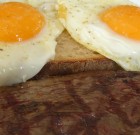
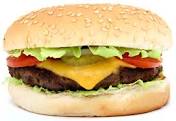
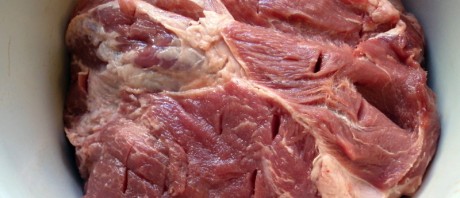
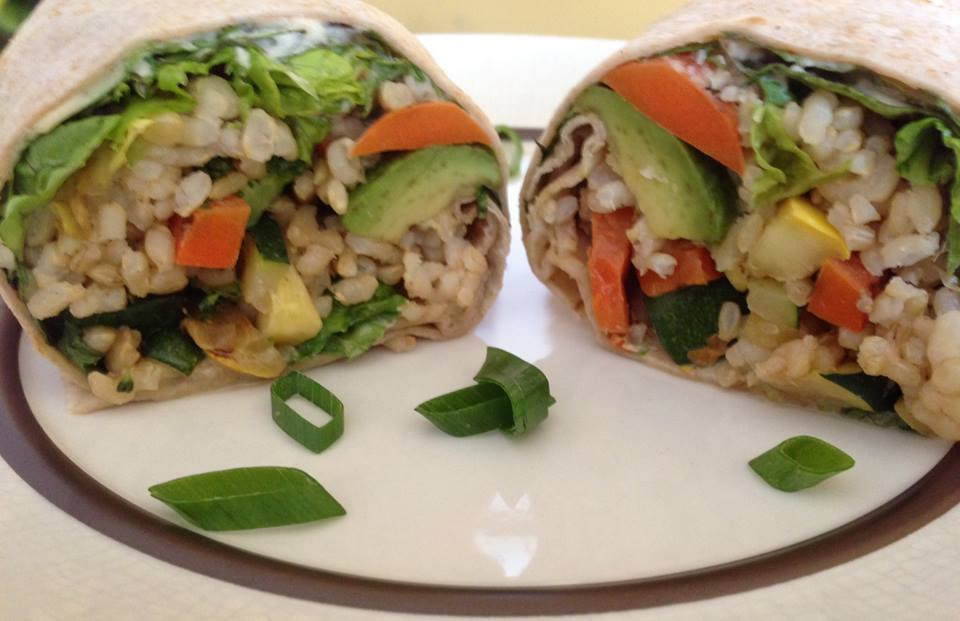
If you look at the two pictures above, without being a bio-chemist or a nutritionist, would it be the meat or plant based wrap: which do you think is more likely to cause low level inflammation in your body?  What would cause more inflammation, a carrot or cows milk, spinach or skeletal muscle from a pig (pork)?   Without any knowledge, common sense or your intuition would tell you that the animal parts would be likely to cause more inflammation than the plant parts: and you would be right.  This is because we are animals and we are more likely to have an immune response (which is what inflammation is) to putting another animal in our mouths, than putting a plant in our mouth.   http://nutritionfacts.org/video/eating-outside-our-kingdom/

Dr Greger in his blog, titled “How Animal Proteins May Trigger Auto-Immune Disease” states

 “A similar mechanism (meaning an autoimmune response triggered by exposure to meat)has been blamed for meat proteins triggering inflammatory arthritis in people eating meat. By eating fellow animals, we are exposed not only to fellow animal diseases, but to animal tissues that our body may mistake as our own. This may be one advantage to eating a more plant-based diet. By eating outside of the animal kingdom—dipping into the plant or mushroom kingdoms for supper—not only do we not have to worry about getting something like Dutch elm disease, but we can be reassured by the fact that never has an “auto-immune polyradiculoneuropathy” been blamed on a head… of lettuce.”

Plants are anti-inflammatory, which means they are anti-disease.  Animal products are pro-inflammatory, which means they are pro-disease.  If our bodies’ immune system is constantly stimulated at a low level, this places a stress on the system which causes illness in the long term.

Dr Colin T Campbell’s  China Study,   showed the higher your rate of animal protein consumption the higher your rate of disease.

How is animal protein the problem and  plant protein not?

Food is a packaged deal and the big difference between the two is what the protein is packaged with (and remember protein is everywhere, from an apple to beans).   In the case of meat, protein is packaged with fat, cholesterol and natural animal hormones/chemicals,  like Insulin Growth Factor 1,  all of which are bad for you, as our body produces cholesterol and hormones in the quantities we need for a human body.  The saturated and trans fat that come from animals are bad for circulation (which is, the good things in and bad things out system, for our bodies).   In the case of plants, protein comes with large amounts of fibre, great for our gut and cleaning out toxins and also thousands of different chemicals, which are great for us.   There is a fascinating story around why plant chemicals are so good for us and it has to do with plants immune systems and defense against environmental threats.   I wil talk about this in more detail in a later blog, but it has to do with the fact that plants are ‘rooted’ to the spot and can’t move to deal with threats.  So they have developed many chemicals to deal with attack, but also to  facilitate dispersal of their seeds.    This is why organic food is higher in nutrients (good chemicals) than non-organic as organic plants have to fight their own battles and are  not being “assisted” by chemical sprays put on by us.

Animal protein is cancer promoting

Even the Cancer Council is clear on this (check their website).   The evidence in terms of bowel cancer is unequivocal in relation to red meat.  Have you ever heard anyone talking about it?  Has your Dr ever mentioned it? ” Oh, by the way if you want to reduce your risk of bowel cancer don’t eat red meat or cut down”.   I don’t think so.  What your Dr and the government want you to do is to be screened.  Find some polyps (growths) in your bowel and have those removed, detect your cancer early, get it treated.  What about preventing it in the first place??   A large percentage of cancers and almost all heart attacks and strokes can be prevented by eating correctly and exercising.   The steps to reduce your risk of cancer are well known and they are the same steps as to reduce your risk of everything else.   Reduce meat and  dairy consumption, increase fruit and vegetables, maintain normal body weight, reduce alcohol intake, quit smoking and increase exercise.    If you were not going to go hungry doing this,  you would need to increase your  consumption of beans, whole grains and starchy vegetables like potato and sweet potato, which is exactly what you should do to be healthy.

Meat causes an inflammation response in our bodies.  Cancer needs inflammation to grow.  We are all likely to have tiny pin prick size cancers in our body and for them to take off, they need a blood supply: their own blood supply.  This is called angiogenesis.   Cancer cells create inflammation so they can bring blood and therefore  nutrients to the cancer cells so they can grow.    But they thrive initially in a state of low level inflammation which can be provided by meat and animal products.  There are two possible pathways:  one is by animal  protein leaking, pre-complete digestion, through the lining of the gut and our body having an auto-immune response to it. (http://nutritionfacts.org/video/the-leaky-gut-theory-of-why-animal-products-cause-inflammation/)  The other, is through a molecule found in meat (Neu5Gc), which promotes inflammation.

http://nutritionfacts.org/video/how-tumors-use-meat-to-grow-xeno-autoantibodies/

Dr Greger gives a summary of the many pathways that contribute to higher cancer rates amongst meateaters.

“Why else might those eating plant-based diets have lower risk of all cancers combined? It could be the lack of IGF-1, heme iron, inflammation, viruses, antibiotics, saturated fat,nitrosamines, and arachidonic acid associated with animal product consumption. Or it could be the DNA repair, cellular stress defenses, anti-inflammatory properties, soy, lignans, phytonutrients, and fiber associated with healthy plant food consumption.”

Nitrosamines come in cured meats like  ham and are known carcinogens, that is, cancer causing agents.  Has anyone ever mentioned it to you, that when you are eating ham and  other processed meats, that you are eating something known to initiate cancer.  This is not a new discovery, but until recently I was unaware and the vast majority of the population would also be unaware.  It would be good if the government mentioned it to us, or our Dr.   The cancer council does.  The problem is we are only likely to go the website for  information once we’ve got cancer!

Animal protein is bad for circulation

gorilla cartoon

If it is bad for  circulation this means it is bad for heart attacks, strokes,  sex (both men and women need a good blood flow for sex), lower back pain, dementia (our brain needs a lot of blood, it consumes something like 15-20% of our energy, not to mention  needing a good supply of oxygen via the blood), crippling arthritis and swelling in our legs.  In fact, you name it, poor circulation is bad for it!   Many  people are alive but crippled by these diseases, resulting in hugely reduced mobility and huge reduction of choice about what they are going to do in life:  that is a huge reduction in quality of life.   This can be profoundly depressing.

Meat is bad for circulation through saturated fat, trans fat, cholesterol, carnitine and  choline, which are processed in the gut and converted into a substance called TMAO which lines the artery and blood vessel walls.  http://nutritionfacts.org/video/carnitine-choline-cancer-and-cholesterol-the-tmao-connection/

It’s worth remembering that it is not just our arteries that get blocked, it’s any of the blood vessels, trying to bring the good stuff and take the bad stuff away.

Vitamin D

We are diurnal animals,  meaning we are active in the day and sleep at night.  On top of that, when we go out in the sun, a chemical in our skin, melatonin, reacts with the sun to produce another chemical, which we call vitamin D.  This vitamin D produced in the skin is turned  into Super Vitamin D and stored in our kidneys  and this is the vitamin D that is used by our bodies.  It is not clear exactly what roles vitamin D plays in our body.   Vitamin D is thought to play a role in diseases such as multiple sclerosis, schizophrenia and mood in general, as well as bone density.

It’s clear Vitamin D is going to very important or why else would  we have a chemical in our skin which reacts with sunlight to produce it?  It turns out that diets high in animal protein and calcium (does that sound like dairy) interfere with the proper use of Vitamin D in our bodies.  (see Colin T Campbell, The China Study for explanation of the pathway and its effects.)   For those of you worried about how you are going to get your calcium if you don’t drink or eat dairy, relax!  There is plenty in wonderful foods like green vegetables such as brocolli, collards and kale.

PS I am running marathon tomorrow,  powered by plants!

Yours in good health


Gary

 

Nobody says eat more meat

NF-July04-Avoiding-Cooked-Meat-Carcinogens-140x135


NF-Nov14-Avoid-Carnitine-and-Lethicin-Supplements-140x135             download

Nobody says eat more meat, eggs, dairy-nobody except the meat, eggs and  dairy industry that is.   Try an experiment.  Imagine you have any chronic illness and go to the internet and look up what you should do to manage this condition.  Invariably, you will be told to eat more fruit and vegetables and exercise.   When you have a chronic illness, no-one says to you, eat more steak, eat more sausages, eat more ham.     Imagine having a heart problem and the Dr or the website telling you, eat more steak!  Drink more milk!  Eat more eggs! Sounds crazy doesn’t it?  That’s because it would be crazy.   They don’t tell you to eat more animal products,  as they know that eating these  will make your  heart condition worse.   The same food that will make our disease worse, is the food that will give us the disease in the first place.  In 2007-08 3.4 million or 1 in 6 Australians had heart disease.   One in three deaths in Australia in 2009 were from heart disease.  It would be worse now.   This is a completley preventable condition.

In the 2007-08 National Health Survey in Australia, nearly all people aged 65 years and over reported having at least one long-term condition (with more than 80 per cent of people in this age group reported having three or more long-term conditions)

Key findings Of Australia’s Health survey 2014

  • Chronic disease leading cause of illness, disability and death – accounting for 90 per cent of all deaths in 2011.
  • More than 3 in 5 adults (63 per cent) are overweight or obese (70 per cent of men, 56 per cent of women)
  • Nearly 3 in 5 adults (57 per cent) do not exercise enough
  • Only 8 per cent of adults eat enough vegetables
  • Only 49 per cent of adults eat enough fruit

The government tells you by its ad campaign(go for 2 &5-nobody knows what it means!) to eat more fruit and vegetable, but it doesn’t tell you to eat less meat and animal products (you could say that is the indirect message, but it is very indirect!)

Pharmaceuticals

Of the 234 million prescription medicines dispensed in 2005,  the two prescription medicines distributed most frequently
through community pharmacies, with the greatest cost to the government and with the highest defined daily dose per 1,000 population, were both medications prescribed for lipid
reduction (lowering of blood cholesterol).

The cost of these medications to the community is staggering and the suffering to the individual and their families is also staggering.

 There is only one reason to have high cholesterol and that is eating meat, eggs, dairy.     Some people reading this will say, but what  about my genes?   These are outside of my control.   Our genes are a very small contributor to the diseases which commonly kill Australians.    Most cancers and heart disease our  two biggest killers could be prevented by diet and exercise.     Even mainstream health information would say 70 -90% of these illnesses.   This is what makes our current technological fix we are pursuing by  pursuing our genetic make up, only make sense in terms of making money,  not good health.   No-one can make money out of you eating plants and exercising.

Genes react to the environment they are placed in and can be turned on or off by that environment.  The biggest environmental impact on us, is the environment we create in our bodies by what we put in our mouths.   Is it an environment that promotes sickness or health, inflammation or a balanced immune system, blocked blood vessels or flexible clean blood vessels, unregulated cell growth or regulated cell growth?   Eating plants is on the postivie side of that ledger every time.  Eating animals is not.

How the body functions is incredibly complex and T Colin Campbell author of that great book, The China Study, doesn’t think we will ever know the complexity of how it works.  As John McDougall says(see link in sidebar),  What do you care, which mechanism it is?  Just knowing that it works, is what’s important.  As he likes to say, “It’s the food!”

For example, do we get heart disease, because of the cholesterol blocking our arteries, the fat blocking our arteries or the TMAO blocking our arteries, with the TMAO being produced from  choline and carnitine in meat, eggs, dairy and fish as it is broken down by the bacteria we need in our gut to digest animals. (if we eat plants only we have different bacteria in our gut to digest plants).  All we need to know is the less meat  and other animal products you eat, the less likely we are to get heart disease (zero is best of course).

I am staggered by how many people have one of the inflammatory bowel diseases: irritable bowel syndrome, ulcerative colits, ulcerative diverticulitis or on another tack constipation.  A sure fire way to have easy, good consistency of bowel movements is to eat plants and exercise( no varicose veins, no haemorrhoids)

What a Dr will tell you is that if you are low in iron, you need to eat meat.  I am not sure how they explain away all of the people  who are eating meat and are low in iron?  There is plenty of iron in leafy greens for example.    Dr’s will tell  you, you must have dairy to stop osteoporosis because if you don’t eat dairy you will have weak bones.  The countries where people have the most fractures, eat the most dairy.  This has been known for decades, but that doesn’t stop the myth being perpetuated.  This fracture story is another example of the mechanism of action being complex.  It was thought for a long time that as animal foods are high in protein( protein is made up of amino acids) that animal foods create an acidic environment in the body and in an attempt to get the balance right, calcium was leached out of the bones, weakening the bones.  It turns out that wasn’t right.  Recent experiments with radioactive calcium in animal products have shown that the calcium that is coming out in the urine after eating animal products is the same calcium that was coming in-  not from the bones.

Where high protein and high calcium foods interrupt health and probably bone density is through blocking the activity of the enzyme in the kidney, which converts the vitamin D made in our skin via sunlight into the more powerful form used in the body.   As McDougall says what do we care about the mechanism?

T Colin Campbell in The China Study outlines eight principles of food and health.  These are:

  • Nutrition represents the combined activities of countless food substances.   The whole is greater than the sum of the parts
  • Vitamin supplements are not a panacea for good health
  • There are  virtually no nutrients in animal based foods that are not better provided by plants
  • Genes do not determine disease on their own.  Genes function only by being activated,  or expressed and nutrition plays a critical role in determining which genes, good and bad are expressed
  • Nutrition can substantially control the adverse effects of noxious chemicals
  • The same nutrition that prevents disease in its early stages(before diagnosis) can also halt or reverse disease in its later stages (after diagnosis)
  • Nutrition that is truly beneficial for one chronic disease will support health across the board
  • Good nutririon creates health in all areas of our existence.  All parts are interconnected.

So, Drs might say to you sometimes, you should eat more meat, but they are not basing this on science, just their own bias and cultural prejudices.    If you are unwell in any way, this is the time to make a change, take control of your health by taking control of what you put in your mouth.   The choice is to keep eating meat, eggs, dairy and fish and gradually get sicker over time and gradually have to take more and more medication or try out eating plants for three weeks to a month.   What have you got to lose?   Only ill-health!

If you are looking for ideas PCRM (sidebar) have a 21 day vegan kickstart programme starting on the 1st of every month.


Yours in good health


Gary

I’ve gotta die from something!

This is true-we do have to die from something but hopefully it is old age!   You know, at about 100+ we have slowly rusted away on the inside from breathing and we cark it.  A lot of people take the attitude of, “I have to die from something, so while I am here, I might as well enjoy myself and I like steak, chips, coke and alcohol”(or whatever there particular poison is).  One of the problems of course is that there is not clear information for people about what to avoid for a longer healthier life and what to do for a longer healthier life.   Clear sustained information along with increase in price, does change behaviour-look what has happened with cigarettes.   The same thing could be achieved with processed and take away food, meat and dairy.

People are clear that  they have to die from something, but not so clear that they have to live with whatever they are going to die from for a very long time.  This can be very unpleasant, unless it is  healthy old age, that you are going to die from.  I am quite happy living with old age for a long time.  Not so happy living with heart failure, diabetes, arthritis, lung disease of various kinds, various bowel inflammatory diseases, alzeihmers or other brain disorders and so on.

The period of life that people are experiencing, where their quality of life is greatly diminished due to chronic illness is extending.   It is not much fun to be sick and restricted  in the possibilities for your life.  Simple pleasures are often lost to you.  For example, we went camping last weekend and I saw a man who couldn’t get down to the beach, where he wanted to take photos of the sunset, as he was unable to walk up and down the path to the beach.

He stated his knees were no good.  It was easy to see why they may be no good.  He was obese, so the pressure on his knees over his life would have been enormous.  They weren’t designed to carry that weight.  It is likely he was also eating inflammatory foods(arthritis is an autoimmune disease-inappropriate immune response causing inflammation.  This is true of  many of the diseases of the western world)

Along with food, sex is one of the great pleasure of life.  In America, 40% of men over 40 have trouble getting an erection because their blood vessels are blocked with cholesterol and fat and they can’t get enough blood flow.   This is why Drs are seeing trouble getting an erection as a sign of possible heart disease.

The good news is that you don’t have to become vegan or an extreme exercise freak to extend your life and  increase the quality of your life.  Being a vegan exercise freak, will be extremely good for you and you will feel great, but smaller steps will make a difference.     Four steps cut your chance of disease and extend your life.  These are:

  • don’t smoke(that is a no brainer)
  • don’t be overweight (bmi(body mass index) less than 30
  • 3.5 hours of physical activity/week
  • eat healthy where eating healthy is defined as eating lots of fruit and veggies, lots of whole grain bread and low meat (this is not the optimum diet for the human body, but in this study, this is what they were using as the benchmark)

http://nutritionfacts.org/video/turning-the-clock-back-14-years/

So, it doesn’t have to be all or nothing.  Any step in the right direction is good and as they say, “from little things big things grow!”


KISS(keep it smart special)

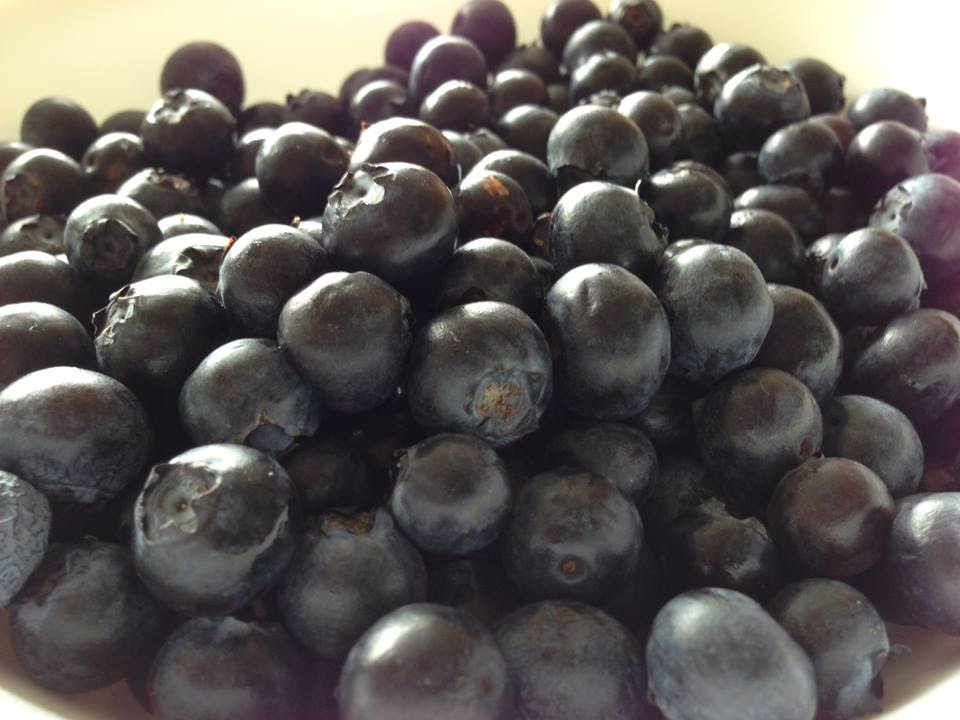
In a nutshell, if you want to supercharge your basic garden variety whole foods, plant based diet you add more: – greens, spices,  nuts,    seeds and  berries.blueberries If you look at that list, you could just say, continue to eat a truckload of vegetables and fruits, but surprise, surprise, not all veggies and fruits were created equal!    Cucumber and iceberg lettuce do have some fibre, phytonutrients(good chemicals  from plants) and  anti-oxidants but they tail the field and are a long way away from the those foods listed above. In general, it is a good idea to eat the biggest variety of fruits and vegetable that you can get into your mouth.  This is becuase if we do this we are maximising the nutrients and the power of plants to heal our body, as different plants have different chemical balances  and different parts of plants have different chemical balances.  Sometimes eating different plants together makes these chemicals more available to our body, like in the case of pepper and turmeric.  Eating pepper with turmeric makes curcumin the helpful chemical to us in turmeric 2000x more available for us to use.  This is good as turmeric fights inflammation(chronic low level inflammation is at the root of  disease in our body) and it has anti-cancer properties(specifically turning back on the cell death process in cancer cells). I am just going to give you a ‘taste’ of the benefits of these particular foods.  If you want more information check out nutrition facts website in the sidebar.

SPICES

Spices are high in anti-oxidants and have many other useful properties as well.  For example, cinnamon lowers your blood sugar levels, but really the best way to keep blood sugar levels low is maintain a healthy weight.  This is because insulin can’t move the sugar from our bloodstream to the cells, as the cells already are too full of fat, if you are overweight.   If you are going to go out of your way to eat extra cinnamon, say a teaspoon a day  on your porridge then  make sure it is cinnamon from Sri Lanka(other cinnamons are often Sennas and are damaging to the liver in high quantities.)

NUTS

Nuts are a good source of fats in the diet and eaten in small quantities with your meal(small handful) increase the availability of nutrients from vegetables, as they aid digestion.   They can also be a good source of minerals, for example Brazil nuts for selenium.  We have three Brazil nuts for breakfast, taken like medicine.  Better than having to take 10-12 pills each morning.  I think the European average for a 60 year old, my age is 9 tablets/day.

SEEDS

Seeds are very good for mood, in fact eating vegetarian or vegan is associated with better mood than being an omnivore.  An amino acid, trytophan, which is high in concentration in some seeds, is a precursor to serotonin production.  The  appropriate level of serotonin in the brain is associated with good mood. One particular seed is especially good for you-flax seed.  Flaxseed is a good source of short chain fatty acids from which our body is able to make  long chain fatty acids.  The beauty of eating flax seeds is they are, like all plants, high in fibre and in the case of flax, have the precursor for the production of lignans in our gut, as the good bacteria in our gut digest it.  Lignans are known to combat breast cancer.  Getting long chain fatty acids for  your brain is much better by the flaxseed route than the fish route.  Flax has  no cholesterol, no excess protein, but most importantly not the high levels of mercury and PCB’s(carcinogenic plastics) found in fish.  If you are going to use flaxseed grind it yourself as you use it as pre-ground it deteriorates and without grinding, it just goes straight out the other end without digesting.

BERRIES

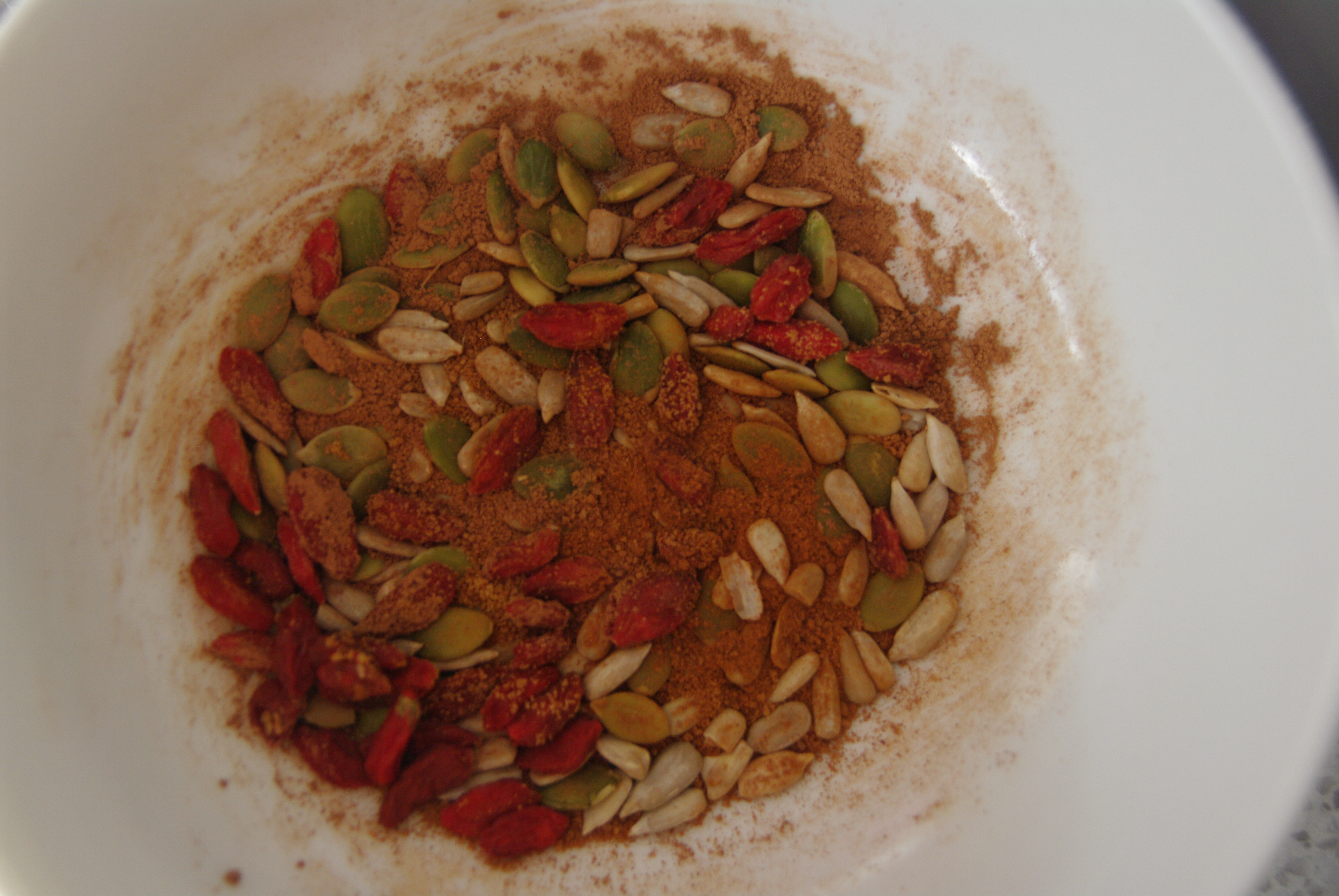
Berries are high in anti-oxidants and  have been found to have many other helpful functions as well, from anti-cancer and anti-inflammation to reducing muscle soreness after exercise(if you eat the berries prior to the exercise).  We have just added them to our diet, by adding them to our morning porride(frozen blueberries or fresh strawberries).  Berries, beans and greens may be the best things for us to eat on the planet! BREAKFAST PORRIDGE We eat a lot of porridge!  Rolled Oats and water(well actually, unstabilised organic oats and water) with lots of other stuff chucked in the bowl.  We add: – ground flaxseed(we don’t have a grinder at the moment so we are adding wheatgerm instead) – cacao nibs -blueberries – banana – sultanas – cinnamon -sunflower seeds -pepitas (pumpkin seeds)

IMGP8219Tastes great, lowers cholesterol from all of the fibre, shoots up anti-oxidants levels to counter DNA damage caused by free radicals which are created just by sitting around breathing, let alone doing anything, has  short chain and therefore long chain fatty acids for the old brain, seeds for mood and fat for digestion and slow release of energy from all of those complex carbs or starches.  What more could you want!! Lunch is rye bread and peanut paste, home made vegan cake and a couple of apples and dinner is some staple(pasta, beans, lentils, rice, potatoes) with a combination of veggies and herbs and spices.

A couple of other tips.  Broccoli  has great anti-cancer properties but it  needs to be cut up 20 -30 minutes before it is cooked to maximise this.  This is due to enzyme is able to do its work and assist chemical reaction to produce the anti-cancer substance.  Similar story for garlic: crush 10 minutes before use.

Enjoy food, enjoy life!

KISS(keep it simple, smart)

Many,  many years ago, I had a social work student, who introduced me to the saying, keep it simple, stupid, meaning there is no need to make things sound complicated or seem complicated-just cut to the chase as they say.  So,  amongst the mountains of information and misinformation out there(you’ll have to make your own judgement as to whether you think what I am about to say is misinformation! ) I want to make it really clear what you should and shouldn’t be eating for good  health, energy, enjoyment of life and longevity.

Forget all of the jargon, complex carboydrates, trans fat, saturated fat,  protein, amino acids, glycaemic index, omega 6, omega 3 etc etc.  What should I put in my mouth and what shouldn’t I put in my mouth?

What to put in your mouth

  • fresh fruit and vegetables and as many different kinds as you can get and can afford.   This is because different fruits and vegetables have different chemical composition and offer different benifts, so the more variety you have, you are giving yourself the best mix of good things for your body.
  • As many leafy greens as you can get-leafy greens are not just spinach but things we never ate as kids, such as kale and rocket.  Leafy greens are very high in anti-oxidants.  The old favourites of brussel sprouts and cabbage are really leafy greens
  • If you just live on veggies and fruit you are never going to get enought to fill you up, so lots of staples as the bulk of your meal.  This is things like rice, lentils, beans, oats, potatoes and sweet potatoes.  The best foods for you on the planet could well be beans, greens and berries.   Berries can be expensive but the other two are dirt cheap.  Much  cheaper than meat,   for example.
  • Drink water, green tea, tea, chai, roobois or any flavour herbal tea you like.  Keep coffee and alcohol to a minimum.  We have recently started drinking coffee with a mix of three quarters decaf and quarter caffeine, once/day maximum.

What not to put in your mouth

  • meat, eggs, milk, cheese, yoghurt, fish and chicken.  There are very many reasons(refer to other bogs or nutrition facts in sidebar) but the most important ones are all of these things contain high levels of fat, cholesterol and protein(yes, high levels of protein are bad for you)
  • any processed food, so this means anything from a factory or a takeaway shop.  Besides containing the nasties listed in the first dot point, these foods are high taste foods and they have been developed that way quite deliberately, so that people want more of them.  High taste is made by being high in fat, sugar and salt(perhaps all three at once!)  The other problem with  these foods is that they tend to have a lot of chemicals added to them, hydrogenated vegetable oil(trans fat) or isolated nutrients from other foods.  These things are all bad for your health.
  • health drinks, slimming powders, protein powders-these are way more expensive than food and are chemical  concoctions.   The only chemical concoctions that are safe to eat , are the ones that nature made.

What does this mean for you?  Never eat anything from your work lunch room, morning tea or shared work lunch.  Always bring your own food.

What do I eat in a day?

For breakfast I have porridge made out of water and oats(with lots of extras I will talk about in another blog)

For lunch,  I have rye bread(if I can get it, where I am living) or wholemeal(good bread is the biggest problem if you are living in the country) with peanut paste(just 100% peanuts no other indgredients), homemade cake made with apple and no sugar and a couple of apples.

I drink chai and roobois during the day at work and coffee as described above when I get home.

Dinner is a mixture of a staple and veggies, or noodle  soup or pasta or anything that Julie dreams up or gets off of the web, or from her daughter, Sarah or the cookbook, usually followed by a piece of cake.

As an aside, this food powers me through running  80 -100kms/week at the moment, weights and exercises, full time work and with lots of energy left over!

So,  it is not rocket science to eat well or to know what to eat.  Don’t  worry about all of the debates about carbohydrate and protein and glycaemic index and which fats are good for  you and which ones are bad for you and is fish oil, going to save everyone on the planet from every illness ever known.   Just eat fresh, whole plant foods:  that’s it!

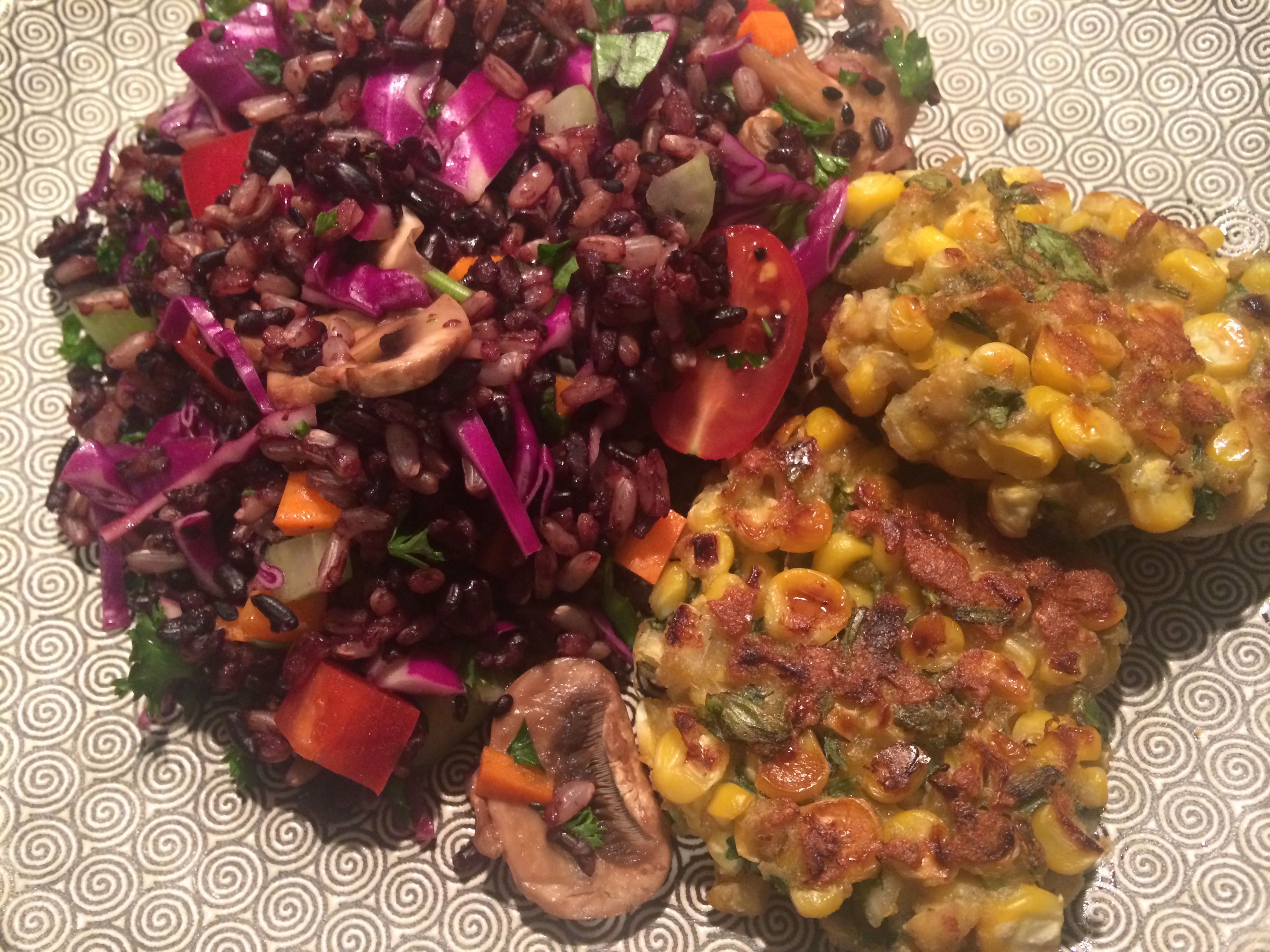
Sarah’s corn cakes and quinoa salad

blog corncakes

Forget the protein, find the fibre


NF-Mar11-Why-You-Should-Eat-More-BeansIMG_9039

As I have talked about before a lot of people are worried about getting enough protein and worried about getting too much carbohydrate.  This is understandable but really completely back to front!  Most people in Australia are eating too much protein and not enough carbohydrate.   When I am talking about carbohydrate I’m not talking about refined processed carbohydrate, like white flour and sugar.  In other words, I am not talking  sugar extracted from sugar cane, or anything else for that matter.  When whole wheat is converted into white flour 78% of the nutrients in  the wheat, most of the goodness and energy to make a new wheat plant from the seed is lost.   All foods are better whole, not broken down into their constituent parts.  Orange juice is better for you than  coke but an orange is much better for you, than orange juice.  One major reason is the fibre, the chewy bit of the orange.

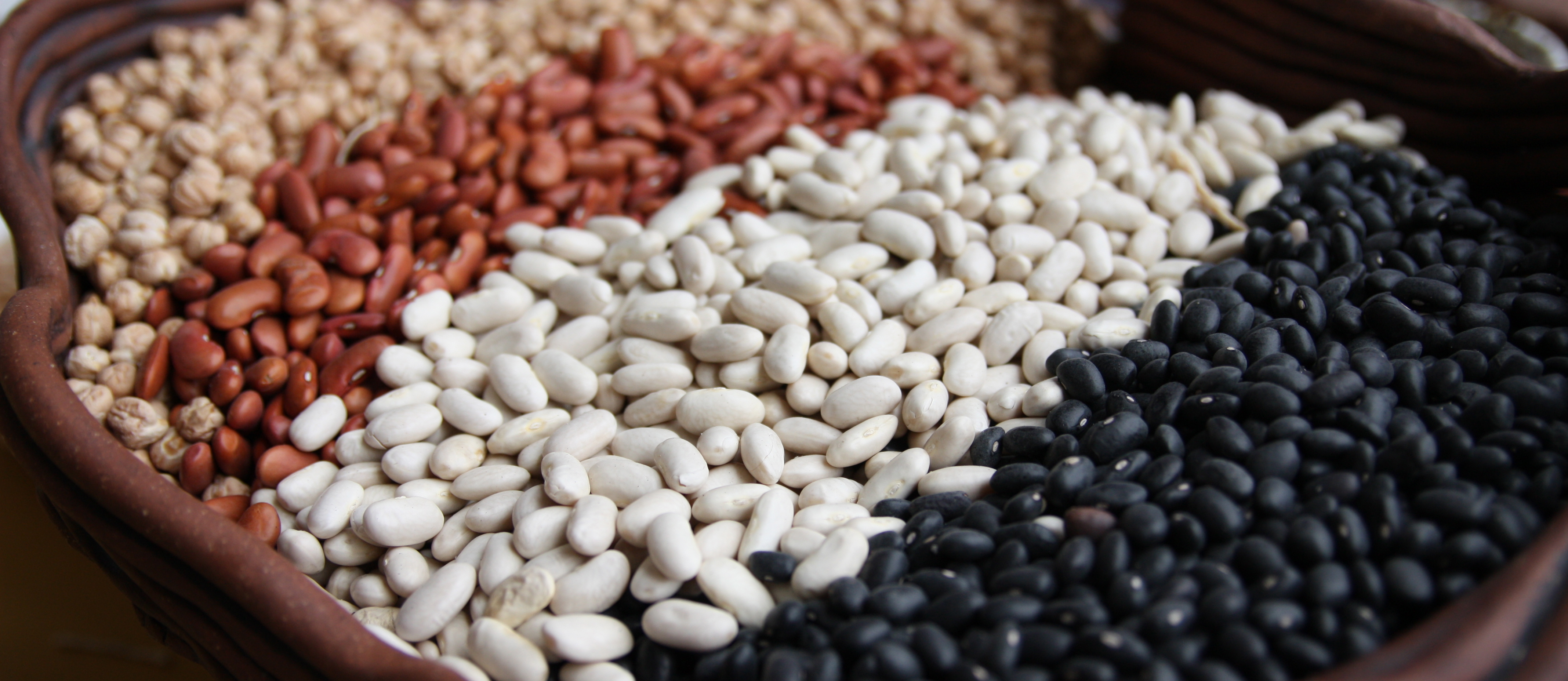
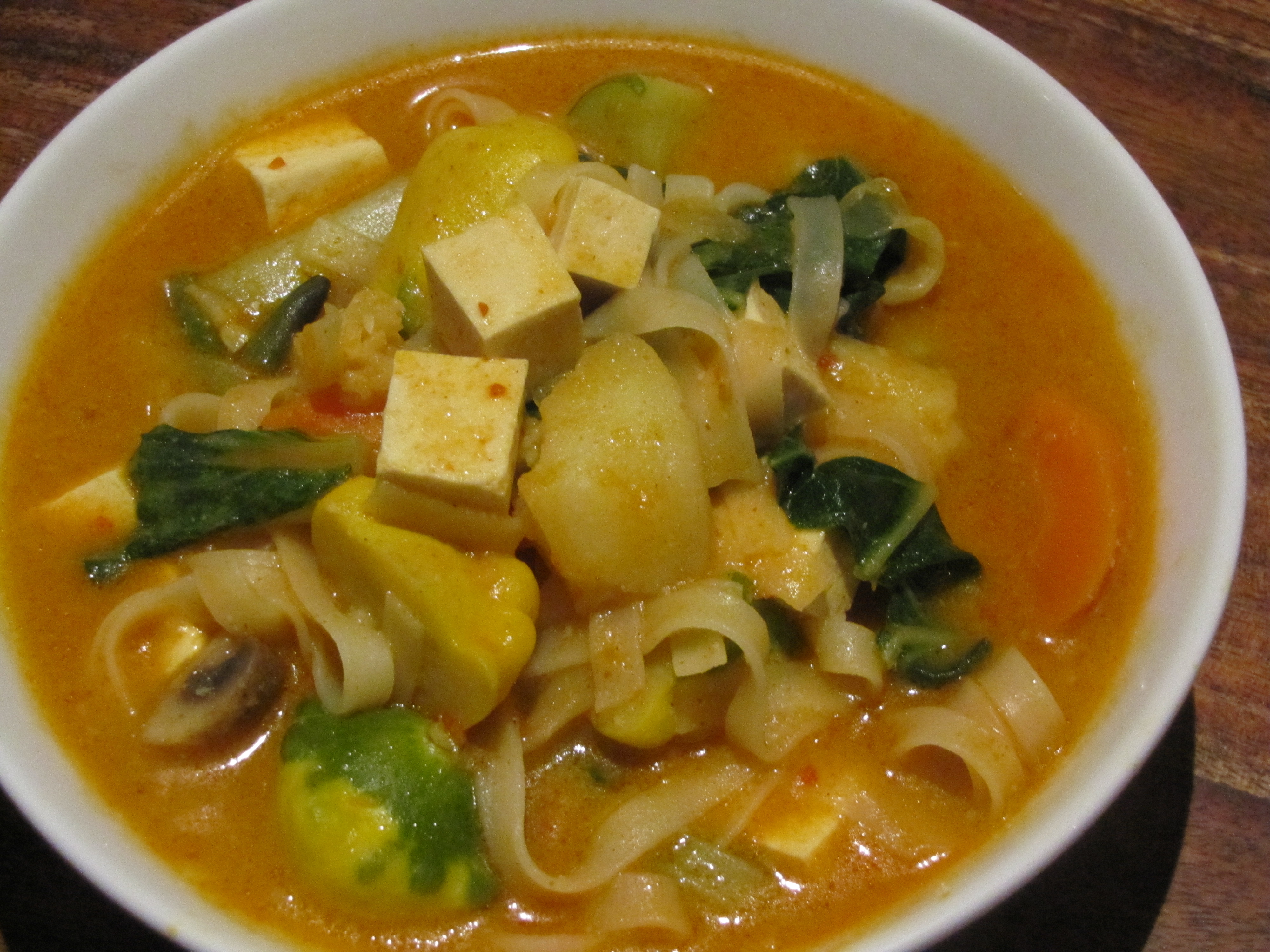
The two photos above show high fibre foods.  Beans are one of the best foods one can eat(http://nutritionfacts.org/2014/03/11/why-you-should-eat-more-beans/) and the other is a high fibre meal of veggies and noodles.   Fibre is only found in plants.

FORGET THE PROTEIN?

As stated in an earlier blog if you are eating enough food you are getting enough protein.   What is the downside of too much protein?  Well, to get too much protein you need to be eating animals, animal secretions(milk) or potential animals (eggs).   The downsides are:

  • What animal protein comes with, which is fat and cholesterol.  These are related to our most serious diseases: heart attack, stroke, cancer and diabetes.  The only place trans fat comes from if it is not man made as hydrogenated vegetable oils to be used in processesed that is,  factory food, is from animals.  The recommended daily intake for a safe level of trans fat?  Zero! (http://nutritionfacts.org/video/trans-fat-saturated-fat-and-cholesterol-tolerable-upper-intake-of-zero/)
  • what animal protein comes without, which is no fibre or the huge variety of vitamins and nutrients found in plants.  It is worth remembering that all energy and life  comes from the sun and plants store that energy in the form of sugars.  These sugars can be simple sugars like the sugar in a grape or banana or complex sugars (this is what is called complex carbohydrates as opposed to refined carbohydrates) like potatoes, wheat, rice and lentils, for example.  No animal can store energy from the sun, all animals have to get it secondhand from eating plants or eating other animals that have eaten plants.  The best way for us to get our energy is by eating whole food plants.    Just one reason is the huge variety and amount of anti-oxidants in plants, compared to animal sources which have only a few trace elements(selenium, copper and zinc which can all be  had from plants without any negatives for  your health.   Plants have on average 6.4 times the anti-oxidant levels than animals
  • The more animal protein you eat, the higher is your level of IGF-1(insulin growth factor -1).  The higher your IGF-1 level the higher your chance of getting cancer.    There are very many pathways to increased cancer risk associated with eating animals, if you are interested check out the research on nutrition facts(greger) in the side bar
  • The more animal protein you eat, the higher your level of toxins in your body like  heavy metals, pesticides and plastics, like PCB.  Why?  Because animals are higher up the  food chain than plants(animals eat plants, or worse still eat animals that have eaten plants, further concentrating the toxins) so these toxins are concentrated.   These toxins are linked to many serious health issues.
  • An additional or competing  explanation for how arteries get blocked was discovered last year.  When humans eat animals and animal products, we need different bacteria in our stomach to digest our food, than if we eat plants.  In fact, fibre is known as a pre-biotic, as the part of the fibre we eat that can be digested promotes the growth of helpful bacteria in our gut.  So, instead of spending a lot of money on probiotics or taking your probiotics(helpful gut bacteria) in  yoghurt with a large amount of fat and protein (and possibly sugar), just eat plants.  Your bowel movements will never have been better!

The bacteria in the stomach of meat and eaters of animal products turn substances almost only found in meat, eggs,dairy and fish(except also found in  lecithin) into a chemical called TMAO which is then laid down on the artery or blood vessel wall, leading to blockages and possible heart attack, stroke and an inability to get an erection. (http://nutritionfacts.org/video/carnitine-choline-cancer-and-cholesterol-the-tmao-connection/)

  • meat causes inflammation and inflammation is considered to be a the base of much of the disease that we suffer from in the west.  Inflammation is  part of  our immune response, and if our body is in a state of chronic low level inflammation, then it is in a state of stress.  This is the situation for many meat eaters, whereby eating meat stimulates an immune response.  Why?  Because the bacteria in meat even though they may be killed by cooking, still elicit a  response from our immune system, when they leak through the gut wall


THE UPSIDE OF FIBRE

Most people in Australia are not getting enough fibre.  Why because they are eating too much meat, fish, dairy, eggs, processed food  including take away foods.   The first four on that list, the animal products don’t have any fibre and the processed and take away food have very little.   The place to get fibre is plants.  All plants have fibre but seeds, like rice and oats  have lots, as do storage organs like potatoes and sweet potatoes.  One of the many reasons that plants are so good for you is that we eat all of the different part of the plant(roots eg carrot, stems eg celery, flowers eg broccoli, leaves eg spinach, fruit eg apple, seed eg wheat or beans/peas, storage organs eg potatoes)  This is the reason that there is such a huge variety of nutrients in plants as there are different chemicals in each part of the plant playing a different function for the  different part of the structure of the plant

The upsides of fibre are:

  • fibre clears toxins out of your body by keeping bowel movements regular and flushing these toxins out with our waste.
  • why is oats considered to be good for dropping your cholesterol?  Because it is high in fibre and just like the above dot point for toxins, it flushes the excess cholesterol out with our waste. The best way to reduce your cholesterol is don’t put in any in!  Our body produces all of the cholesterol it needs and like everything it is a self regulating well balanced system given the right environment.  The only place cholesterol is found is in animal products so every bit of animal, milk or egg that we put in our mouth we are creating a problem for our body, as to how it is going to manage the cholesterol
  • fibre is a pre-biotic-it sets the environment in our gut for the growth of good bacteria.  The gut is beginning to be considered like a second brain, with neurotransmitters from our brain being in our gut and the type of bacteria people have in their gut being closely related to their mood.   Alternative medicine people have long thought that the gut/digestive tract and emotions/mental health are closely related and science now seems to be bearing this out
  • fibre is anti-inflammatory because of the bacteria needed to digest it produce a short chain fatty acid which has many beneficial effects including reducing inflamation.
  • fibre is great for weight loss as it fills you up!  ( and lots of it is not digested and just goes out the back end)  Eating plants, that is eating fibre, also speeds up your metabolism, so more of the calories you eat are just burnt up sitting around and are given off in  heat.  If you eat fat(read fish, dairy, eggs and meat) only 3% of calories in the fat, are used up in digestion, so the  fat on your lips, is the fat on your hips.   The other benefit of eating fibre(plants) for weight loss is that you don’t have to restrict your calories, that is, go hungry to lose weight.  When we do  that(go hungry) the body thinks there is an emergency on  and slows our metabolism down to protect us, making it harder to lose weight, so we have to starve ourselves more.  The consequence is that when we give up( which we will, cos you can’t go hungry forever) and we start to eat normally the body will go, bewdy, the hard times are over, let’s stack the weight on in case things get  bad again!

Eating fibre(whole food plant diet) is fun as you get your taste buds back from the fat, sugar and salt, you get to taste a huge variety of foods(like realising cabbage is sweet) and you know with every mouthful it is good for you.


Enjoy!


How to change behaviour:what you eat/exercise

I think Nike were right.  Just Do It!  According to the guy who wrote the book on barefoot running,  called Born to Run, Nike were wrong about footwear,  that wearing cushioned running shoes actually causes injuries.  This is basically to do with the idea that the human body was designed to run and a part of  that design is our foot seeking feedback from the  ground that we are running on, to guide our footfall.  Cushioning gets in the way of this feedback.   I am currently running in Nike Frees and I love them-very light, but somehow feel like not as hard as running barefoot.   The only time I have been injured from running is from stretching pre-run or when the guy in the store sold me running shoes with arch support, which I didn’t need.  I was training for a marathon at the time and not surprisingly developed achilles soreness.

By the way not everyone is built to be a long distance runner, some poeple are sprinters:  horses for courses.  I know some of you will think you are neither, but the bottom line is the more you move, the more you are capable of  moving.

Anyway, that is all an aside.  What this blog is about is, how to change.   If you are going to ‘just do it’, you need strong motivation(in my view 90% of the story: most people who give up smoking or drinking alcohol just do it themselves; just make up their minds, no counselling, no drugs/medication, they just wanted to).   In fact, there is evidence that for giving up smoking, nicotine replacement makes it harder to give up, not easier to give up.

The more we do something the more we want to do it.  There is an old saying, “actions speak louder than words”.  This is so true.  Actions trump thoughts, trump feelings, trump bodily sensations and trump  meaning or perception.   We are very habitual animals.   Because we live in the sort of world where it is very easy to get short term pay- offs for doing bad things , it is very easy to  develop bad habits-habits that are not good for us and sometimes not good for other people.  If on top of that we are mixing with people who are promoting these bad things, either in a virtual internet world or in person, we can quickly think it is ok to do stuff, that previously we wouldn’t have approved of.

The upside of actions trumping everything else is that actions are the things we have the most control of.  Our thoughts and feelings and bodily sensations seem to come from nowhere sometimes and they are upon us, before we even know it!   Our actions are much more under our control and I would argue that the name of the game is to have them completely under our control.  I have spent a long time working with men who act violently.   One of my messages to them is if  you act calmly, even though your thoughts, feelings, bodily sensations and perceptions are violent, over time the thoughts, feelings, bodily sensations and perception will fall into line with your actions.  Actions trump everything else.  Nike, “just do it”.

Why would you take the actions you don’t want to,  when every other part of you is screaming out not to?    Why would you not eat the chocolate, milk coffee, eggs and bacon and steak, that every part of you wants to eat?  Why would you not roll over in bed  in the morning rather than go for a walk or a run?   Because you don’t want to continue down that path,  you want to take the action because you are motivated.    The good thing is, that the more you take the action the easier it gets.  Here’s the crazy thing: the more you take the action like eating different food or exercising the more enjoyable it becomes!   In fact if you didn’t take those actions you would miss them and feel no good!    We are creatures of habit, we enjoy what we do:  the more we do it, the more we enjoy it.    This is especially true for eating well and exercise as there are real physical and pyschological benefits, that come from this independent of the habit and your perception.    Unfortunately, there is always a lag between starting to take the action, the development of the habit and the benefits that come from it.   For someone like me anyway the benefits of practicing guitar for example, take quite a while to show up, whereas the benefits of eating well (not poisoning yourself with too much fat, protein, salt and sugar and not depriving yourself of enough fibre and vitamins and anti-oxidants from plants) and exercising show up pretty quickly(the experts reckon give yourself three weeks).

Unfortunately also the pleasure gained by eating the chocolate and the cheese and rolling over in bed and not exercising are immediate and the pain of these choices may not show up for decades either in early death or the pain(physical and pyschological) of perhaps decades of ill-health.

One good way to tackle it is to set yourself short term goal of eating well and exercising for three weeks and then re-assess.  What have you got to lose?  At most three weeks!  What have you got to gain: your health, energy and enthusiasm and a big investment in your future.   I  don’t know who said this but “time and tide wait for no man”.   Unfortunately,  most of us need a kick up the bum, some sort of crisis, before we make changes.  Why wait until you are diagnosed with a chronic illness?   If you are currently well take a look around you at your workmates,  family and friends and see what state they are in and get some motivation!

HERE’S MY MAP FOR CHANGE

  • get really clear about why you want to change: what you want to leave behind and what you are heading towards: your destination.  This is the important bit, the motivation.  If you are really clear about why you are motivated to change, why you don’t like where you are  headed at the moment and why you want to end up in a different place and what that looks like, it will be easier for you to keep on track with the other challenges of the change process, as there is no doubt changing is a challenge.  If it wasn’t a lot more people would do it!
  • change  habit-identify the biggest problem behaviour and start the opposite behaviour or find ways to interrupt the problem behaviour
  • resist urges/temptation-realise  thoughts and feelings come and go,  like summer rain-wait them out
  • keep thoughts on track with new direction and block old  habitual thinking - oppose habitual thinking with slogans of your own making, that fit with your destination-make these slogans about building something not about stopping something
  • support: who can  help in a crisis or as part of noticing change
  • change picture of self

IMGP8199IMGP8200

genetics is not destiny

I recently was travelling in  Nepal and discussion around the dinner table turned to health, as it was likely to do, as Julie and I are vegan and healthy, so in some ways this is a challenge for people.  A lot of people have a lot of chronic illnesses and take a lot of medication, or their close family members are in this camp-even amongst people who are walking in Nepal.  Just being  vegan and healthy can be taken as a criticism of them or  make people feel on the back foot, as they may take the implication that  their illness is their fault.   Whilst the biggest contact with the environment that anyone has is through the lining of their stomach, it is perfectly normal in this society to eat badly, so there is no personal failing involved in doing so.

During this dinner conversation I did make a remark, which was probably unwise, when one member of the group stated, eating scallops cooked in bacon fat, from the morning eggs and bacon was to “die for”.   I said, that ironically that may well be the  case!   He rightly pointed out he was 75 and I was yet to get there.    Another member of the party weighed into the debate, finding out the age that my parents died, which was mid-70’s stating that “it didn’t look too good for me then!”     This would be true if genetics were destiny, which in the case of the illnesses common in Australia, that are responsible for killing the most people and reducing the quality of life of the most people, is certainly not the case.

These illnesses doing the most damage are diabetes, heart attacks, strokes, cancer and lung problems.    The genes that influence  these things are not genes like the genes for eye colour or getting Huntingdon’s Chorea-these genes are dictators, you have the gene, you have the eye colour or the disease.   The genes that influence our most common diseases, causing the most pain and suffering are heavily influenced by environment-what you eat.  Every mouthful we eat affects how our genes that we are stuck with are expressed: that is, how much influence they have over our health.  What we eat can increase the activity of some genes and decrease the activity of some others.   Everybody  knows that the outcome for a gene, relates to it’s interaction with the environment.  This is how natural selection works-those genes which fit with the environment the best have more chance of being passed on to the next generation, by the species surviving and procreating.  What is not so well known, is that the environment affects how that gene is expressed or how much it is active, by that species interaction with the environment during its lifetime.   Genes are not set in stone at birth  and will continue to act like that over our lifetime: they respond to the environment they are in and the biggest interaction with the environment, is through our stomachs and the food we eat.

My case example, proves nothing but it may illustrate the point.  My blood pressure in January this year was 126/80(first number is pressure immediately after the heart pumps and second number is pressure immediately before it pumps again).   This blood pressure is high but not seriously so.  In my 30’s ( I am now 60) my  blood pressure was 140’s top figure and I can’t remember the bottom figure.  I was vegetarian but like a lot of vegetarians I ate a lot of dairy: milk, full cream yoghurt and cheese.  Both of my brothers have high blood pressure and eat a normal western diet.  I have been a vegan for around 10- 12 years.   I haven’t had the genetic testing but it seems likely that all three of us brothers have a genetic predisposition to high blood pressure.  At least for the last ten years I have not been supplying the right environment for the genes responsible for  my predisposition to be expressed, at least to the degree that it would have been otherwise.

The direction we are going in healthcare( disease mongering?) at the moment in terms of genetic testing is part  of the high tech ‘solutions’ that we are applying to health, which are incredibly expensive and will prove to be a dead end.  All they have achieved so far is enabling sick people to live longer and often longer with an impaired quality of life.   The other thing this approach achieves is to create more patients, as people can become a part of the  sickness industry even before they have any symptoms or anywhere near any symptoms.

Genetic testing is pursuing disease rather than pursuing health.  Pursuing health is easy and free: get out in the sunshine, sleep well at night time, eat well and move.  Pursuing disease is expensive and is the realm of experts and takes us further down the path of the patient as the passive recipient of care.   The solutions provided by the sickness industry to your perceived level of genetic risk to a disease will be what the sickness(health) industry provides: medication and surgery.

For information on how to effect the expression of your genes by exercise and what you eat, see, “Turn off the fat g enes:the revolutionary guide to losing weight” by Neal Barnard from PCRM(see link in side bar)

IMGP7968
nepal -Mt Everest


eating well, Frantz Fanon and John Butler

Recently I read somewhere that eating well could be considered an act of resistance-resistance to the dominant ideas about meat, eggs, diary, fish, processed factory food and takeaway fast food,  as what food consists of.    Resistance to being normal and travelling down the normal path in life.  This normal path is be overweight to varying amounts, to have one or more chronic conditions, to respond to these chronic conditions by taking ever more medications and at least for now, to live longer but with an ever greater burden of sickness and decreasing  quality of life.

To not follow  this path, takes a deliberate act on our parts.  This is where Frantz Fanon and John Butler come in.  In 1961, Fanon wrote a book titled The Wretched of the Earth about colonisation, at the time when anti-colonial movements were starting in Africa.  He drew attention to the fact that it was important to de-colonise your mind as a first step in freeing yourself-from the oppressors, the dominant ideas, the colonisers.   He pointed out that it just wasn’t your country  that the colonisers had taken over-they had taken over our minds: how we felt about ourselves, what we thought was important, what we gave value to, what gave us pleasure-in other words, we don’t have to be controlled and policed by the outside, but we are controlling and policing ourselves from the inside.   This fits also with Foucault’s ideas about power.  So, Fanon argued that when the colonisers have taken over our minds we think about ourselves as they think about us and we want to be like them.  He was referring to the black people of Africa taking on the coloniser’s ideas that they were inferior to the whites and should stay in a master/slave or servant relationship.   In the colonisation of our minds we have taken on the idea of the big companies that we are worthless, we have no inherent value, but we can accrue value by getting and having things-buying and consuming.  The culture of consumption:always having more, getting more pleasure.   This is partly why people are always happy to add something to their diet, that is the latest fad to cure all ills, like fish oil for example.  But they are not so keen to take things away from their diet, which is curious as the problem with people’s diets is too much fat,sugar and protein: excess not deficiency.  Our biology sets us up to seek pleasure and consumer culture blows that up or uses that propensity.   But nothing happens in isolation: every action that we take effects how we see ourselves and how we see ourselves effects every action.

John Butler the Australian muso has a couple of songs very relevant to these ideas:  Better Than and Used to Get High.   In Used to Get High, he uses the idea of  getting high from drugs as being out of touch with reality but in the chorus, hooks it right into food.

“I used to get high for a living, believing everything I saw on the TV

I used to get high for a  living, eating or the bullshit food that  they sold me”

So, have a listen.

used to get high-right click to open link in new tab and hear song