For those  of you out there who are still subscribed, I’m back.  A lot of things have happened but this is a blog I have wanted to write for a long time.  People often describe being a vegan, not eating  meat, eggs and dairy as extreme.  A common response is, “everything in moderation”  and a “little bit can’t hurt you”.
Dr Caldwell Essessltyn the man who did the study reversing heart disease by putting people with repeated and chronic problems with their  heart on a vegan diet, says if you want to see something extreme have your chest sawn in half, so you can have bypass surgery around some blockages in your arteries.  Or I am thinking maybe it is extreme to be sitting in aged care facility with vascular dementia, not knowing who you or anyone else is.  That sounds pretty extreme and good blood flow is promoted by eating plants (fruits, veggies, grains and beans) not by eating meat, eggs and dairy.  Meat, eggs, dairy and  highly processed foods due to their high sugar and fat content promote poor blood flow.  Blood flow counts everywhere from our genitals to our brain and our heart.  If we want to have good function in those places we need to have good blood flow.
PCRM have an info graphic in relation to meat stating there is no safe dose of meat. Â The less the better, but every bite of meat is doing us harm, the same as every cigarette is doing us harm.
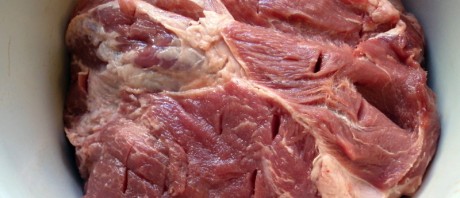
Red and Processed Meat Products:
No Safe Amount P H Y S I C I A N S C O M M I T T E E F O R R E S P O N S I B L E M E D I C I N E
5 1 0 0 W I S C O N S I N A V E., N. W., S U I T E 4 0 0 • W A S H I N G T O N, D C 2 0 0 1 6
P H O N E ( 2 0 2 ) 6 8 6 – 2 2 1 0 • F A X ( 2 0 2 ) 6 8 6 – 2 2 1 6 • P C R M @ P C R M . O R G • W W W . P C R M . O R G
More than half of the meat products Americans
consume are red meat, and nearly a quarter are
processed meat.1 Processed meat products include bacon,
deli slices, sausage, hot dogs, and any other meat
products that have been preserved with additives or
otherwise manipulated to alter color, taste, and durability.
Current dietary guidelines recommend limiting
red and processed meat products, but eliminating
them may be the safest option, because scientific
research continues to identify health hazards these
products pose.
What Makes These Meat Products Dangerous?
Both red and processed meat products contain high
levels of DNA-damaging n-nitroso compounds. Heme,
the iron component of animal products, promotes the
formation of n-nitroso compounds.2 Processed meat
products contain these compounds because they are
preserved with nitrites. N-nitroso compounds are also
associated with increased cancer risk.3
Processed meat products are extremely high in sodium,
which is used as a preservative. Studies show a
direct link between high-sodium diets and high blood
pressure.4,5 Because about 80 percent of dietary salt
comes from processed foods,6 avoiding these products
is critical for decreasing overall sodium intake. High
blood pressure can lead to kidney failure, heart failure,
heart attack, and stroke.6
Red and processed meat products are also high in
saturated fat, which can lead to increased risk of cardiovascular
disease, obesity,7 and diabetes.8
Cardiovascular Disease
Cardiovascular disease (CVD) remains the number
one killer of Americans. Nearly a quarter of deaths
from CVD are avoidable,9 and dietary intervention is a
major factor for prevention. The sodium and saturated
fat content of both red and processed meat products
contribute to the risk of heart disease.
1
In the European Prospective Investigation into Cancer
and Nutrition (EPIC), which followed 448,568 men
and women, researchers found a strong correlation between
consuming processed meat products and risk
of dying from CVD. Those consuming more than 160
grams per day of processed meat products had a 30 percent
increased risk of death from CVD, compared with
those who consumed 10 to 20 grams per day.10
Results from the Health Professionals Follow-up
Study (HPFS) and the Nurses’ Health Study (NHS) indicate
that eating just one serving of a processed or
unprocessed red meat product a day increases risk of
death from diseases such as cancer and heart disease.
These studies tracked the diets of 37,698 men from the
HPFS and 83,644 women from the NHS for up to 28
years. All participants were free of CVD and cancer
at the start of the study. Risk of death increased by 20
percent for those consuming processed meat products,
and for those who had one serving of a red meat product
a day, the mortality rate increased by 13 percent.11
Diabetes
Fat accumulation within muscle cells can lead to
insulin resistance,12-14 which then contributes to the
development of type 2 diabetes. The high-fat content,
particularly saturated fat, in red and processed meat
products is a potential risk factor for type 2 diabetes.
In a 17-year follow-up study conducted with 8,401
Seventh-day Adventists, researchers found that those
who ate meat products at least once a week were 29
percent more likely to develop diabetes, compared to
those who reported eating no meat products. Processed
meat product consumption alone caused a 27 percent
increased risk for diabetes.15 These findings supported
the research of other studies.16,17 Seventh-day Adventists
are an ideal research population because they
avoid tobacco, alcohol, and caffeine. Thus, there are
fewer factors to consider when analyzing the relationship
between diet and disease risk.
Moreover, in the Adventist Health Study-2 which
examined 60,903 individuals, nonvegetarians were
twice as likely to be diagnosed with type 2 diabetes
compared with those avoiding meat products.18
In a 2011 meta-analysis of 442,101 participants,
consumption of both unprocessed and processed red
meat products was significantly associated with risk of
type 2 diabetes. For consumption of 100 grams per day
of unprocessed red meat products, there was a 19 percent
increased risk for type 2 diabetes. For consumption
of 50 grams per day of processed meat products,
about the size of one hot dog, there was a 51 percent
increased diabetes risk.19-21
Diabetes is a particularly challenging health problem
in the Native American population. A recent study
following more than 2,000 Native Americans living in
the Southwestern United States for a five-year period,
found that those who ate processed meat products
were more likely to develop diabetes.22
Cancer
Red and processed meat products can increase risk
for various cancers, including pancreatic,23 stomach,24
bladder,25 and most significantly, colorectal cancer.26
The risk is higher for processed meat product consumption,
though it is still significantly increased with
unprocessed red meat products consumption.
The World Cancer Research Fund (WCRF), in conjunction
with the American Institute of Cancer Research
(AICR), found, in a comprehensive and ongoing
analysis of research, that red and processed meat
products are, together and individually, “convincingâ€
as risk factors for colorectal cancer. The combination
of evidence indicates a 30 to 50 percent increased risk
for colorectal cancer when consumption of these meat
products is highest.26,27 Specifically with regard to processed
meat product consumption, investigators in the
EPIC study discovered an 11 percent increased risk of
dying from cancer with the consumption of 50 grams
per day.10
Researchers also recently investigated the dose-response
nature of red and processed meat product
consumption and colorectal cancer risk and found
that a dose-response relationship does exist. Risk
increased by 29 percent for every 100 grams of red
meat product consumed per day and by 21 percent
for every 50 grams per day of processed meat product
consumed.28
Conclusions
There is strong evidence that consumption of both
unprocessed red meat products and processed meat
products can lead to increased risk for many diseases,
including CVD, diabetes, and cancer.
In order to practice the best measures for disease
prevention, these unhealthful meat products should
be avoided altogether. In substitution studies, it was
found that replacing one serving of red or processed
meat product a day with nuts decreased risk for disease
by 19 percent and replacement with legumes decreased
risk by 10 percent.11 Therefore, when replacing
a meat product, it is best to choose healthful, high-fiber
foods such as beans and lentils. Ultimately, a plantbased
diet eliminates the health risks of meat product
consumption and is ideal for disease prevention.
References
1. Daniel CR, Cross AJ, Koebnick C, Sinha R. Trends in meat products consumption in the
USA. Public Health Nutr. 2011;14: 575-583.
2. Cross AJ, Pollock JR, Bingham SA. Haem, not protein or inorganic iron, is responsible
for endogenous intestinal N-nitrosation arising from red meat products. Cancer Res.
2003;63:2358-2360.
3. Loh YH, Jakszyn P, Luben RN, Mulligan AA, Mitrou PN, Khaw KT. N-Nitroso compounds
and cancer incidence: the European Prospective Investigation into Cancer and Nutrition
(EPIC)-Norfolk Study. Am J Clin Nutr. 2011;93:1053-1061.
4. He FJ, MacGregor GA. Effect of modest salt reduction
on blood pressure: A meta-analysis of randomized
trials: implications for public health. J Hum Hypertens.
2002;16:761–770.
5. Johnson AG, Nguyen TV, Davis D. Blood pressure
is linked to salt intake and modulated by the angiotensinogen
gene in normotensive and hypertensive
elderly subjects. J Hypertens. 2001;19:1053–1060.
6. Appel LJ, Brands MW, Daniels SR, Karanja N, Elmer
PJ, Sacks FM. Dietary approaches to prevent and treat
hypertension: a scientific statement from the American
Heart Association. Hypertens. 2006;47:296-308.
7. Phillips CM, Kesse-Guyot E, McManus R, et al. High
dietary saturated fat intake accentuates obesity risk associated with the fat mass and obesity-
associated gene in adults. J Nutr. 2012;142:824-831.
8. van de Laar F, van de Lisdonk E, Lucassen P, et al. Fat intake in patients newly diagnosed
with type 2 diabetes: a 4-year follow-up study in general practice. Br J Gen Pract.
2004;54:177–182.
9. Centers for Disease Control and Prevention (CDC). Avoidable deaths from heart disease,
stroke, and hypertensive disease: US 2001-2010. MMWR Morb Mortal Wkly Rep.
2013;62:721-727.
10. Rohrmann S, Overvad K, Bueno-de-Mesquita HB, et al. Meat products consumption
and mortality-results from the European Prospective Investigation into Cancer and Nutrition.
BMC Medicine. 2013;11:63-75.
11. Pan A, Sun Q, Bernstein AM, et al. Red meat products consumption and mortality:
results from 2 prospective cohort studies. Arch Intern Med. 2012;172:555-563.
12. Petersen KF, Dufour S, Befroy D, Garcia R, Shulman GI. Impaired mitochondrial activity
in the insulin-resistant offspring of patients with type 2 diabetes. N Engl J Med.
2004;350:664-671.
13. Krssak M, Petersen KF, Dresner A, et al. Intramyocellular lipid concentrations are correlated
with insulin sensitivity in humans: a 1H NMR spectroscopy study. Diabetologia.
1999;42:113-116.
14. Perseghin G, Scifo P De Cobelli F, et al. Intramyocellular triglyceride content is a determinant
of in vivo insulin resistance in humans: a 1H-13C nuclear magnetic resonance
spectroscopy assessment in offspring of type 2 diabetic parents. Diabetes. 1999;48:1600-
1606.
15. Vang A, Singh PN, Lee JW, Haddad EH, Brinegar CH. Meat products, processed meat
products, obesity, weight gain and occurrence of diabetes among adults: findings from
Adventist Health Studies. Ann Nutr Metab. 2008;52:96-104.
16. Snowdon DA, Phillips RL. Does a vegetarian diet reduce the occurrence of diabetes?
Am J Public Health. 1985;75:507-512.
17. Fraser GE. Associations between diet and cancer, ischemic heart disease, and allcause
mortality in non-Hispanic white California Seventh-day Adventists. Am J Clin Nutr.
1999;70:532S-538S.
18. Tonstad S, Stewart K, Oda K, Batech M, Herring RP, Fraser GE. Vegetarian diets and incidence
of diabetes in the Adventist Health Study-2. Nutr Metab Cardiovasc Dis. 2013;23:292-
299.
19. Pan A, Sun Q, Bernstein AM, et al. Red meat products consumption and risk of type 2 diabetes:
3 cohorts of US adults and an updated meta-analysis. Am J Clin Nutr. 2011;94:1088-
1096.
20. Aune D, Ursin G, Veierod MB. Meat products consumption and the risk of type 2 diabetes:
a systematic review and meta-analysis of cohort studies. Diabetologia. 2009;52:2277-
2287.
21. Micha R, Wallace SK, Mozaffarian D. Red and processed meat products consumption
and risk of incident coronary heart disease, stroke, and diabetes mellitus: a systematic
review and meta-analysis. Circulation. 2010;121:2271-2283.
22. Fretts AM, Howard BV, McKnight B, et al. Associations of processed meat products and
unprocessed red meat products intake with incident diabetes: the Strong Heart Family
Study. Am J Clin Nutr. 2012;95:752-758.
23. Nöthlings U, Wilkens LR, Murphy SP, et al. Meat products and fat intake as risk factors
for pancreatic cancer: the multiethnic cohort study. J Natl Cancer Inst. 2005;97:1458-1465.
24. Wang X, Terry PD, Yan H. Review of salt consumption and stomach cancer risk: Epidemiological
and biological evidence. World J Gastroenterol. 2009;15:2204–2213.
25. Ferrucci LM, Sinha R, Ward MH, et al. Meat products and components of meat products
and the risk of bladder cancer in the NIH-AARP Diet and Health Study. Cancer.
2010;116:4345-4353.
26. World Cancer Research Fund (WCRF)/American Institute for Cancer Research (AICR).
Food, nutrition, physical activity and the prevention of cancer: a global perspective. Continuous
Update Project. Washington, DC: AICR; 2011.
27. Vargas AJ, Thompson PA. Diet and nutrient factors in colorectal cancer risk. Nutr Clin
Pract. 2012;27:613-623.
28. Chan DSM, Lau R, Aune D, et al. Red and processed meat products and colorectal cancer
incidence: meta-analysis of prospective studies. PLoS ONE. 2011;6:e20456.
People are comparing where  we are with meat, eggs and dairy today to where we were with smoking in the 1950’s: those in the know who follow or have access to the research know now unequivocally that meat, eggs and dairy are bad for you.  The general public is starting to get the idea but are largely uninformed and just like the tobacco industry, the animal agriculture and big food companies are trying to create as much misinformation and confusion as they can about  the fact that eating meat, eggs, dairy and processed food is bad for you.
There is a huge interest in health at the moment and companies are cashing in selling gluten free or super foods. Â Eating and living healthy is incredibly simple and requires no special foods or expense.
- eat whole plants, fresh where possible (I don’t mean raw necessarily)
- exercise daily including where you are supporting your body weight like walking or running
- sleep well and get outside during the day, preferably early in the day
- don’t smoke cigarettes
The problem with everything in moderation is that we have too much easy, strong tasting food and we are not very moderate animals! Â If it’s available we go for it. Â Do you remember the advertisement for the chips, “bet you can’t eat just one!” Â This is not because they were particularly tasty but because they are high in fat and salt: two things we evolved to eat.
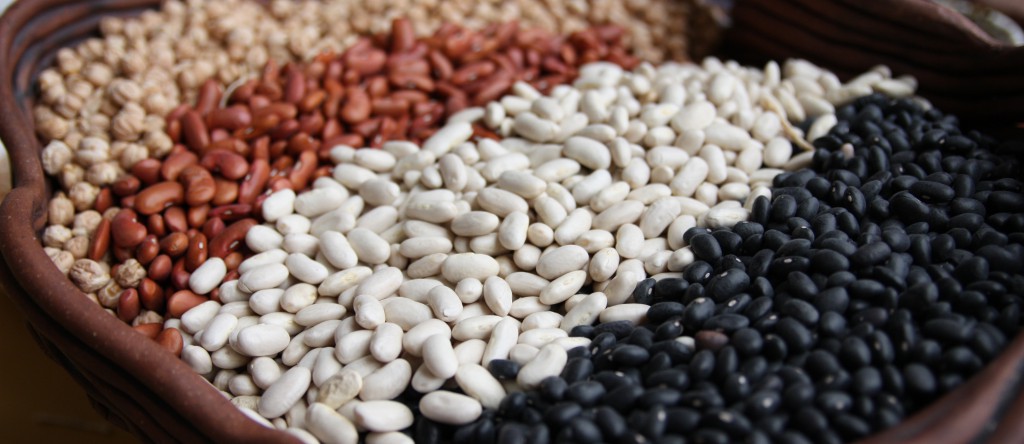
Beans, greens and berries
So, if we eat a moderate amount of meat, egss, dairy and processed food,  we will have a moderate amount of death and disability.  The big factor in people’s lives now is the amount of disability, people are living with, which is affecting their quality of  life, very negatively.  These effects are physical in terms of mobility or activities they feel able to undertake but perhaps more importantly they are mental or emotional in terms of their sense of well being or  joy of living.  When I see a person afflicted with a chronic illness I feel for them, but I also feel for the animals on the trucks going past my house, heading for fear and death.  So,  if we eat “moderately” of meat, eggs, dairy and processed food we are contributing “moderately” to animal cruelty and death.   If we think about it and feel about it, there is  nothing moderate about a slaughterhouse or a factory farm.