Scientists are starting to think of human beings as a “super-organism.” Â That is, we are not one single organism living in isolation. Â We as an organism, are dependent on the millions of other organisms (bacteria) that live in our gut. Â Â What we eat changes the species composition of the bacteria, which live in our gut. Â The more fibre, the more friendly or helpful the bacteria. Â We feed them from the food we eat and their waste products play helpful roles in our metabolism. Â For example, Â a short chain fatty acid produced by these bateria reduces inflammation. Â Chronic low level inflammation is at the base of many of our most serious killer diseases including cancer. Â (see Dr Greger’s Nutrition Facts for more information).
As I have mentioned in previous blogs, if  we have a low fibre diet, that is a diet  high in meat and dairy with the occasional potato chip and limp lettuce, we have different bacteria in our gut, than if we have a high fibre diet.  These bacteria take choline and carnitine present in animals and convert it to a substance called TMAO which is laid down on the lining of our arteries, leading to blockages of our blood vessels.  Blockages lead to heart attacks and strokes.
To get gut bateria that are helpful to us, eat a lot of fibre. Â Many people these days are aware of the value of good bacteria and are purchasing pro-biotics. Â This is an expensive and never ending solution, as the good bacteria in these pro-biotics need to keep being replaced as they are put into a gut that is hostile to them, with not enough fibre for them to eat! Â So, they perish. Â Cut to the chase and eat a high fibre diet ( whole plants, like beans and veggies) and have the right food and environment for our bacterial friends.
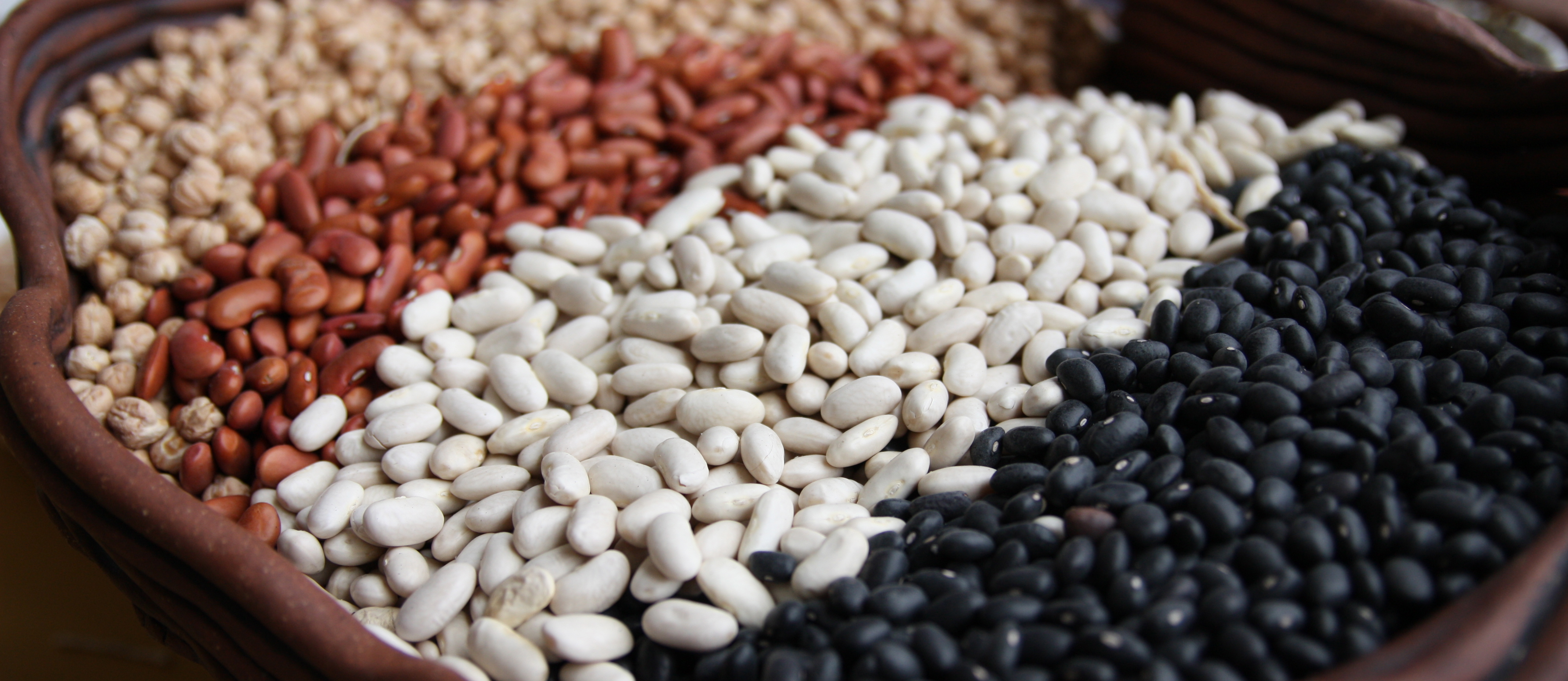
Beans, greens and berries
The fibre/gut bacteria story is only just starting to unfold and it is becoming clear that our gut bacteria have a profound influence on our health.  The emphasis at the moment, is in relation to auto-immune diseases, where our body creates inflammation and attacks itself inappropiately.  These are diseases like asthma, multiple sclerosis and cancer.  My  feeling, is that the gut bacteria story is going to cover many things in the future.  It is already known that overweight people have different gut bacteria to people of a healthy weight.  Amazingly, if the gut bacteria of a healthy weight person are placed in an overweight person (don’t think too much about the route and method but suffice to say it involves faeces!), the overweight person loses weight.  This highlights the importance of growing and supporting good bacteria in our stomachs.  Fortunately,  it is simple, eat whole  plants.
A painless and enjoyable way to lose weight is by eating more plants.  This is because, by eating more plants we are  eating more fibre and as a result  less calories(The Starch Solution).  Most people eat about 10-12 gms of fibre/day and we should be aiming for 40 -50 gms/day.  For every 14 gms of fibre we eat/day, we  taken in 10% less calories/day.  This is because fibre is very filling, so we don’t feel hungry and fibre passes through us, giving up not all of its stored energy (calories) along the way.  If we get to 40 gms/day fibre on an average 2000 calorie intake/day, w e will have dropped to 1680 calories/day, on the basis of 10% less calories taken in for every 14 gms of fibre taken in.   This is a 320 calorie/day drop.  Walk for an hour/day for our mental health and we might, depending on our weight, use up 400-500 calories.  So, that’s around 800 calories/day.  Do that for 3 months and that’s a lot of calories.  The best thing is that this can be done without feeling hungry, as fibre is filling!  Not to mention the fat and sugar  we are not eating, which was  in the processed food that we were eating, before we started eating all of those veggies, beans and fruit.  If we wanted to lose weight quickly, we could cut out the fruit, as well.  (See McDougall’s Maximum Weight Loss Diet)
Foods  high in fibre, for example beans, are harder to digest than say a hamburger, so our body uses up more energy (calories) in digestion and gives off more of the energy in the food, in heat.  In other words, are engine (metabolism) is ticking over quicker.  When we eat whole plants we notice this by our increased levels of energy and our improved mood. (check out this video  to see how much fun eating veggies can be!) In comparison to whole plants, (plant foods have almost no fat)  only a small number  of calories in fat are used in digesting fat, which is why the fat we eat is the fat we wear!
As I have mentioned in previous blogs, eating lots of fibre keeps us regular in terms of bowel movements, with a transition time of 24 hours or less, not days or even weeks! Â A quick transit is good as there is less time for harmful stuff, like excess cholesterol and toxins, to be re-absorbed back into the body, which is what happens if there is a slow transit of our waste products.
Fibre is our friend. Â It fills us up and cleans us out! Â We need never go hungry and we can feel good about eating, as we know every bite is doing us good. Â No more guilt and regret about eating, as eating is a natural, enjoyable and rewarding experience.
Fill up on fibre!