fibre is your friend

Scientists are starting to think of human beings as a “super-organism.”  That is, we are not one single organism living in isolation.  We as an organism, are dependent on the millions of other organisms (bacteria) that live in our gut.     What we eat changes the species composition of the bacteria, which live in our gut.  The more fibre, the more friendly or helpful the bacteria.  We feed them from the food we eat and their waste products play helpful roles in our metabolism.  For example,  a short chain fatty acid produced by these bateria reduces inflammation.  Chronic low level inflammation is at the base of many of our most serious killer diseases including cancer.  (see Dr Greger’s Nutrition Facts for more information).

As I have mentioned in previous blogs, if  we have a low fibre diet, that is a diet  high in meat and dairy with the occasional potato chip and limp lettuce, we have different bacteria in our gut, than if we have a high fibre diet.  These bacteria take choline and carnitine present in animals and convert it to a substance called TMAO which is laid down on the lining of our arteries, leading to blockages of our blood vessels.  Blockages lead to heart attacks and strokes.

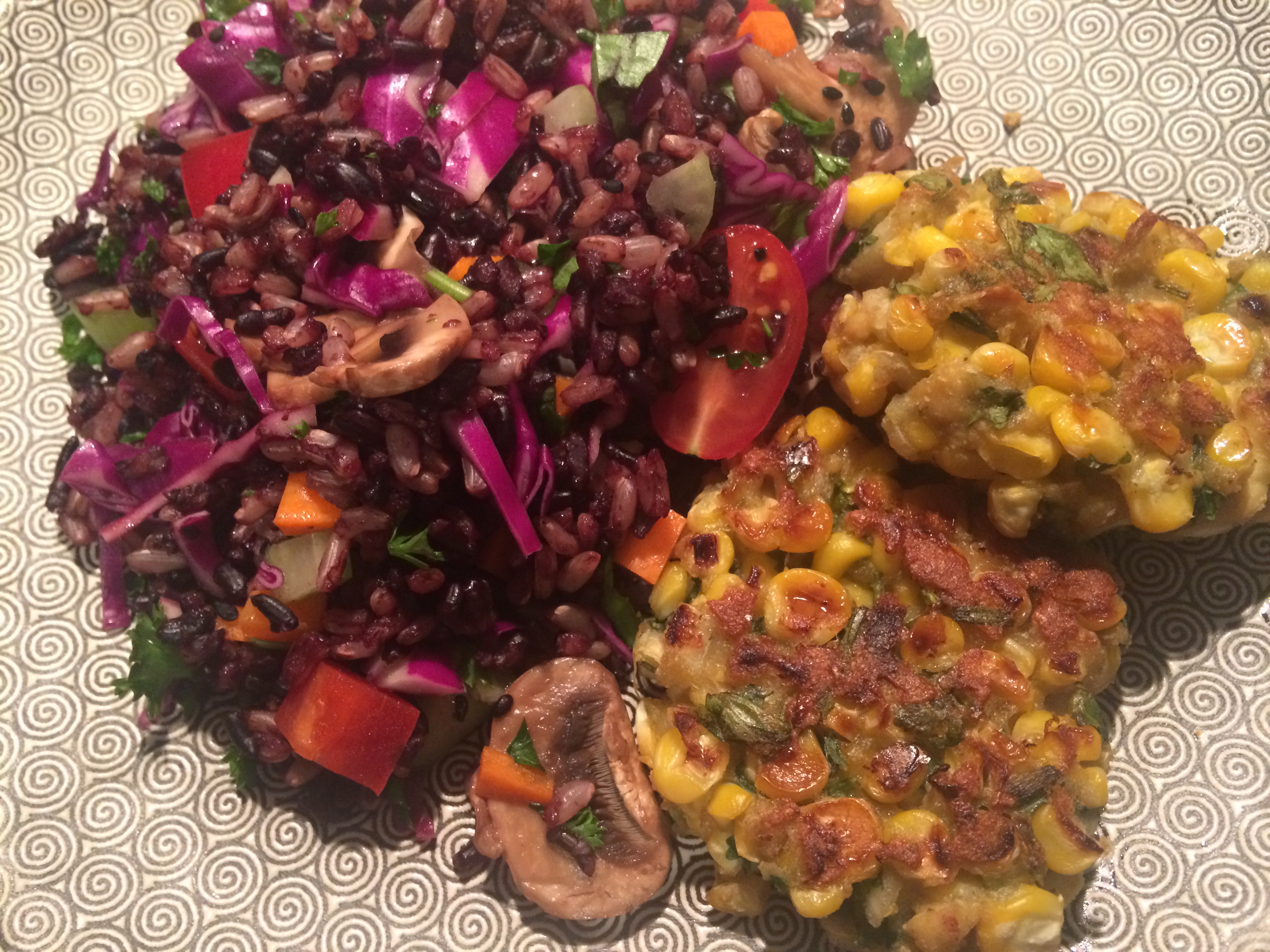
To get gut bateria that are helpful to us, eat a lot of fibre.  Many people these days are aware of the value of good bacteria and are purchasing pro-biotics.  This is an expensive and never ending solution, as the good bacteria in these pro-biotics need to keep being replaced as they are put into a gut that is hostile to them, with not enough fibre for them to eat!  So, they perish.   Cut to the chase and eat a high fibre diet ( whole plants, like beans and veggies) and have the right food and environment for our bacterial friends.
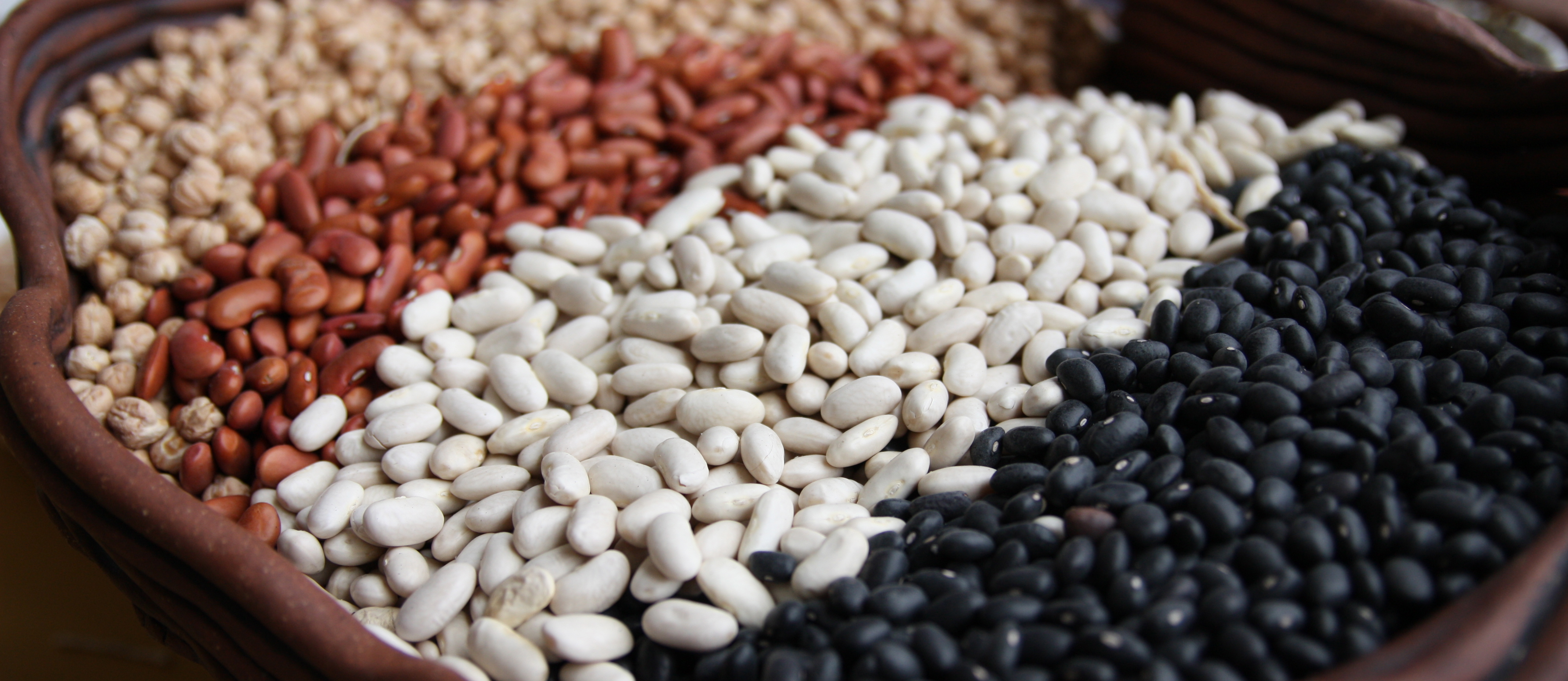
beans, oneof the triumvirate of great foods: Beans, greens and berries
beans, oneof the triumvirate of great foods:
Beans, greens and berries

The fibre/gut bacteria story is only just starting to unfold and it is becoming clear that our gut bacteria have a profound influence on our health.  The emphasis at the moment, is in relation to auto-immune diseases, where our body creates inflammation and attacks itself inappropiately.   These are diseases like asthma, multiple sclerosis and cancer.  My  feeling, is that the gut bacteria story is going to cover many things in the future.   It is already known that overweight people have different gut bacteria to people of a healthy weight.  Amazingly, if the gut bacteria of a healthy weight person are placed in an overweight person (don’t think too much about the route and method but suffice to say it involves faeces!), the overweight person loses weight.   This highlights the importance of growing and supporting good bacteria in our stomachs.   Fortunately,  it is simple, eat whole  plants.

A painless and enjoyable way to lose weight is by eating more plants.  This is because, by eating more plants we are  eating more fibre and as a result  less calories(The Starch Solution).   Most people eat about 10-12 gms of fibre/day and we should be aiming for 40 -50 gms/day.   For every 14 gms of fibre we eat/day, we  taken in 10% less calories/day.  This is because fibre is very filling, so we don’t feel hungry and fibre passes through us, giving up not all of its stored energy (calories) along the way.   If we get to 40 gms/day fibre on an average 2000 calorie intake/day, w e will have dropped to 1680 calories/day, on the basis of 10% less calories taken in for every 14 gms of fibre taken in.    This is a 320 calorie/day drop.  Walk for an hour/day for our mental health and we might, depending on our weight, use up 400-500 calories.   So, that’s around 800 calories/day.  Do that for 3 months and that’s a lot of calories.  The best thing is that this can be done without feeling hungry, as fibre is filling!  Not to mention the fat and sugar  we are not eating, which was  in the processed food that we were eating, before we started eating all of those veggies, beans and fruit.  If we wanted to lose weight quickly, we could cut out the fruit, as well.  (See McDougall’s Maximum Weight Loss Diet)

Foods  high in fibre, for example beans, are harder to digest than say a hamburger, so our body uses up more energy (calories) in digestion and gives off more of the energy in the food, in heat.  In other words, are engine (metabolism) is ticking over quicker.  When we eat whole plants we notice this by our increased levels of energy and our improved mood. (check out this video  to see how much fun eating veggies can be!)  In comparison to whole plants, (plant foods have almost no fat)  only a small number  of calories in fat are used in digesting fat, which is why the fat we eat is the fat we wear!

As I have mentioned in previous blogs, eating lots of fibre keeps us regular in terms of bowel movements, with a transition time of 24 hours or less, not days or even weeks!  A quick transit is good as there is less time for harmful stuff, like excess cholesterol and toxins, to be re-absorbed back into the body, which is what happens if there is a slow transit of our waste products.

Fibre is our friend.  It fills us up and cleans us out!  We need never go hungry and we can feel good about eating, as we know every bite is doing us good.  No more guilt and regret about eating, as eating is a natural, enjoyable and rewarding experience.

Fill up on fibre!

there was an old woman/man who swallowed a fly

“The more time, toil, and sacrifice spent by a population in producing medicine as a commodity, the larger will be the by-product, namely, the fallacy that society has a supply of health locked away which can be mined and marketed.”
― Ivan Illich, Limits to Medicine: Medical Nemesis: The Expropriation of Health
This comment from Ivan Illich didn’t only apply to pills/medicines but to the medical industry as a  whole.  However, pills are the most obvious and ubiquitous commodity that as a society we trade in, in terms of ‘buying’ health.
There is a pill for every problem.   Even pills for non-problems, like taking vitamins, with the idea of ‘optimizing’ your health.   Or other non-problems like taking pills because you have a cold, to take away your symptoms (these are the very symptoms, we should be happy to have as they are a sign our body is fighting the cold and these symptoms are the byproduct of that fight).  Or bugging your Dr to give you anti-biotics for your cold or flu, when your cold or flu is a virus and anti-biotics are completely ineffective.   What the anti-biotics will do is kill off good bateria in your gut, which are a part of your immune system defense.
This pursuit of pills as health, is a part of where we are in western society at the moment, in that we are increasingly seeking immediate gratification (solutions)without any effort on our part and we can’t tolerate any discomfort.  Many children growing up in Australia today rarely experience the outside world, particularly being hot or cold.   They live in cooled or heated houses, travel in air-conditioned cars, go to  school in air conditioned classrooms and are frightened of ants or beetles!   This discussion may seem a long way from health, but this coddled life is likely one of the reasons that asthma and allergies are on the rise-kids aren’t exposed enough to dirt!

So, in our pursuit of pills as the solution to our problems, we are like the “Old Woman Who Swallowed  a Fly”

We all know this song, from our childhood.  It is a story about a woman( inthis case us, modern western humans) who  started off with a small problem, a fly and started on the path of swallowing animals to catch each animal she swallowed.  Each time she swallowed a “cure” she had a bigger problem and just like Ivan Illich described over fifty years ago, when the solution of swallowing things didn’t work, she just did more of it, in bigger quantities!    Eventually, she got to the ultimate solution, death.  “She swallowed a horse!  She’s dead of course!”

This process sounds eerily like the way we deal with disease.  We take ever greater number of medicines/pills of an increasingly serious nature, until we are dead, of course.    Some medicines are good, like anti-biotics, although they are horribly misused by the medical profession, but mainly by factory farming/agriculture, thereby putting everyone’s health at risk.  Vaccines are another example, of a good medicine, but again subject to abuse by the ever widening definition of who should be vaccinated.

pills

The medications we take for our killer diseases(cancer, diabetes, heart attacks, strokes) are largely ineffective,as they in general tackle the symptoms of the disease, not the cause of the disease.  On top of that they are incredibly expensive, if not to the person taking them, then to the taxpayer.  Worse than this, they can be dangerous, even leading to death.   At the beginning of his annual review of nutrition literature, Dr Michael Greger, describes how medical treatment is the leading cause of death in the USA.   How?   It is a combination of adverse effects of prescribed  medication, (not overdose with the intention of harming oneself), medical mistakes and infections caught in hospitals.    Adverse effects of medication were the biggest contributor to the high  numbers of people killed by medical intervention.

pills1

In the last week there  has been a headline example of this in Australia,  although the Therapuetic Goods Administration seems to think there is no problem.  ““The TGA has considered the articles and notes there is no new information that would indicate a change in the benefits and risks of Pradaxa.”   This  was in response to a British Medical Journal article which claimed, that the makers of blood thinning drug,  Pradaxa “put marketing ahead of safety”.  In addition, “Figures obtained by the ABC reveal Pradaxa has been associated with 280 deaths in Australia and 1,400 adverse drug reactions in the past five years, including abdominal bleeding, brain haemorrhages, strokes and heart attacks.”    According to the TGA, this is grounds for business as usual!

The irony is that Pradaxa is prescribed to decrease the chance of the very things that it seems to be increasing:  that is brain haemorrhages, strokes and heart attacks.  In this case, the British Medical Journal claims, the makers of Pradaxa withheld information from regulators as they were concerned it would effect sales.   I until recently, and probably you, assume that all information from  trials about a drug are made available to the regulator, so our safety can be protected.  This is not the case.   The true safety and efficacy of drugs are really only tested when the people prescribed them, start taking them.  Many drugs have been pulled  from market, aftermany people have died unnecessarily.

It is much easier to get information about what is happening in the USA, but when it comes to health and lifestyle, we are usually the same or in a worse position than them.

David Maris in an article on Forbes.com quotes national survey results for America in relation to prescription medicine.

  • 34% of American adults take at least one prescription drug
  • 11.5% of American adults take three or more prescription drugs.
  • 6.5% of American adults take 4 or more prescription drugs.

And if you look at the over 55 age group as the above figures are for adults 18 and over, the picture gets worse.

  • Nearly half of all Americans aged 55 and above are on a prescription drug, vs. just 23% of those 18 – 24 years old.  If we look at those on 4 or more drugs – only 2.6% of 18 – 34 year olds are on 4 or more drugs vs. 12.6% of those 65+ years old.

I personally think the most startling and shocking figure there is that a quarter of Americans between 18 -24  are taking a prescription drug!   These people are supposed to be in the prime of their life.

If you start asking around amongst your friends and family, who is on prescription medication and what they are on, I think you are going to get a shock.  I know I did.

I recently watched a series by Michael Mosely called, “Trust me, I’m a Dr” on a flight from Adelaide to Broome.  There were a couple of interesting things mentioned,  one being that the average person in Britain  takes 20,000 pills across a lifetime!  He was walking along with a wheelbarrow, full to the brim which was equivalent to  one person’s average consumption.  This was all pills: prescription pills, ‘health’ supplements, painkillers, cold and flu tablets and so on.

They also did an interesting experiment with a Vitamin C tablet which showed over a 24 hour period, the person who took the tablet had excreted more vitamin C in their urine, than was in the tablet!  The person wasn’t eating some special high vitamin C diet, just normal everday food that most people eat: meat, vegetables, cereal, few beers and wine-that kind of thing.   So, paying for vitamin C supplements, we may just be paying for expensive pee! (clearly the person had enough vitamin C already and the body just got rid of the excess)

It is important to understand the use of the words, side effects, when they are used in relation to prescription drugs.   What we mean by side effects, is not the effects that we are taking the drug for, like lowering our blood pressure or lowering our cholesterol.  The side effects though, are direct effects of the drug on the human body.  (For example, one of the unwanted direct effects of taking statins, our most frequently prescribed drug, is muscle weakness)   They are the effects that this drug will have on a certain number of people who take it.   They are direct effects and very often people with chronic conditions have to live with these direct effects permanently.  Or sometimes, take other pills to combat the effects of the original pills! (sounds awfully like the old woman who swallowed a fly!)

This is one of the problems of starting on the pill road.  It is a slippery slope, one pill leads to another.  Because if you are unwell, the body is a system where everything works together and if things are failing, other things will start failing.   A chronic disease diagnosis is a diagnosis of deterioration in health, increase in sickness and ever greater levels of medical intervention, leading to ever greater levels of medical intervention.

It is important to realise that pills are not curing our disease, they are at best treating our symptoms and reducing the likelihood of a  short term deterioration in our health.  Over the long term, we are still headed the same place: getting worse.

If food is the problem, then food has to be the solution.   All of the pills in the world can’t overcome re-injury with food, three or more times a day.


bowel movements, eating plants, exercise and health

I wanted to call this blog something like, “the good thing about getting the shits!”, but I am conscious of the fact that the title of each blog is how search engines find it, so I wanted to make it search engine friendly.

This topic came to mind this morning as I hadn’t ran for two days and  went for 11.4 kms this morning, on  beautiful  Cable Beach Broome, Australia.    Within an hour of the run, I had a bowel movement.  This happened even though I had three bowel movements the previous day and one before my run!

As someone who eats only plants and  almost no processed food(that is de-fibred food with added sugar, salt and fat from a factory or take away chain) my bowel movements are regular, substantial and easy to produce. (non – ease of production, that is forcing leads to varicose veins, haemarroids and hiatal hernia, coming from all of the blood being forced around our body over a long period of time, due to all that straining!)    Medical professionals need a classificatory system, a taxonomy of pooh, so that there is a standardised way of talking about bowel movements and everyone is talking from the same page, so to speak.  Nurses frequently in hospitals have to look at our bowel movements and report on them, as an indicator of our health and the taxonomy they use is the Bristol Stool Scale.    I like all  vegans who stay away from processed food, you will be happy to know, have bowle movements categorised as a 4 on the scale, right where you want to be.

It is not however, just the  quality of our bowel movements that is important, it is also the quantity.

And last but not least the speed of transit, through our gut to our bowel is also important.  One way to  test whether  your bowel movement today relates to what you ate yesterday or 3-4 days ago, which is where most people are at, is to eat a lot of beetroot.   Just sit back and wait to see how long it takes for your faeces to  turn red and you have some important information about the  health of your intestinal system.   You will have improved your intestinal system by eating a lot of beetroot, which has a lot of fibre, which is only found in plants.  Fibre is what is neccesary to have good bacteria in our

high fibre tasty meal

gut and good bowel movement.  For the curious,  it takes 16 hours for my faeces to turn red.   It shouldn’t take any more than 24 hours.  If it does, eat more fibre and  get more exercise.  Fibre, meaning eating more unprocessed plants or whole food plants is the main thing though.

So, even though, I tick all of the boxes, quality, quantity and speed of transit, my bowel movements are still improved by exercise!   The exercise doesn’t have to be running an hour/day, just walking every day will do it.  I used to lead off track bushwalking trips for a few weeks at a time, consequently the diet was largely plant based and of course, we were walking everyday, approximately 10 kms (this far would not be necessary to improve bowel movement).  After a few days, people invariably started discussing the extent, nature and urgency of the bowel movements they were experiencing compared to their life pre-trip.

Plants and exercise work wonders!!