KISS(keep it simple, smart)

Many,  many years ago, I had a social work student, who introduced me to the saying, keep it simple, stupid, meaning there is no need to make things sound complicated or seem complicated-just cut to the chase as they say.  So,  amongst the mountains of information and misinformation out there(you’ll have to make your own judgement as to whether you think what I am about to say is misinformation! ) I want to make it really clear what you should and shouldn’t be eating for good  health, energy, enjoyment of life and longevity.

Forget all of the jargon, complex carboydrates, trans fat, saturated fat,  protein, amino acids, glycaemic index, omega 6, omega 3 etc etc.  What should I put in my mouth and what shouldn’t I put in my mouth?

What to put in your mouth

  • fresh fruit and vegetables and as many different kinds as you can get and can afford.   This is because different fruits and vegetables have different chemical composition and offer different benifts, so the more variety you have, you are giving yourself the best mix of good things for your body.
  • As many leafy greens as you can get-leafy greens are not just spinach but things we never ate as kids, such as kale and rocket.  Leafy greens are very high in anti-oxidants.  The old favourites of brussel sprouts and cabbage are really leafy greens
  • If you just live on veggies and fruit you are never going to get enought to fill you up, so lots of staples as the bulk of your meal.  This is things like rice, lentils, beans, oats, potatoes and sweet potatoes.  The best foods for you on the planet could well be beans, greens and berries.   Berries can be expensive but the other two are dirt cheap.  Much  cheaper than meat,   for example.
  • Drink water, green tea, tea, chai, roobois or any flavour herbal tea you like.  Keep coffee and alcohol to a minimum.  We have recently started drinking coffee with a mix of three quarters decaf and quarter caffeine, once/day maximum.

What not to put in your mouth

  • meat, eggs, milk, cheese, yoghurt, fish and chicken.  There are very many reasons(refer to other bogs or nutrition facts in sidebar) but the most important ones are all of these things contain high levels of fat, cholesterol and protein(yes, high levels of protein are bad for you)
  • any processed food, so this means anything from a factory or a takeaway shop.  Besides containing the nasties listed in the first dot point, these foods are high taste foods and they have been developed that way quite deliberately, so that people want more of them.  High taste is made by being high in fat, sugar and salt(perhaps all three at once!)  The other problem with  these foods is that they tend to have a lot of chemicals added to them, hydrogenated vegetable oil(trans fat) or isolated nutrients from other foods.  These things are all bad for your health.
  • health drinks, slimming powders, protein powders-these are way more expensive than food and are chemical  concoctions.   The only chemical concoctions that are safe to eat , are the ones that nature made.

What does this mean for you?  Never eat anything from your work lunch room, morning tea or shared work lunch.  Always bring your own food.

What do I eat in a day?

For breakfast I have porridge made out of water and oats(with lots of extras I will talk about in another blog)

For lunch,  I have rye bread(if I can get it, where I am living) or wholemeal(good bread is the biggest problem if you are living in the country) with peanut paste(just 100% peanuts no other indgredients), homemade cake made with apple and no sugar and a couple of apples.

I drink chai and roobois during the day at work and coffee as described above when I get home.

Dinner is a mixture of a staple and veggies, or noodle  soup or pasta or anything that Julie dreams up or gets off of the web, or from her daughter, Sarah or the cookbook, usually followed by a piece of cake.

As an aside, this food powers me through running  80 -100kms/week at the moment, weights and exercises, full time work and with lots of energy left over!

So,  it is not rocket science to eat well or to know what to eat.  Don’t  worry about all of the debates about carbohydrate and protein and glycaemic index and which fats are good for  you and which ones are bad for you and is fish oil, going to save everyone on the planet from every illness ever known.   Just eat fresh, whole plant foods:  that’s it!

Sarah’s corn cakes and quinoa salad
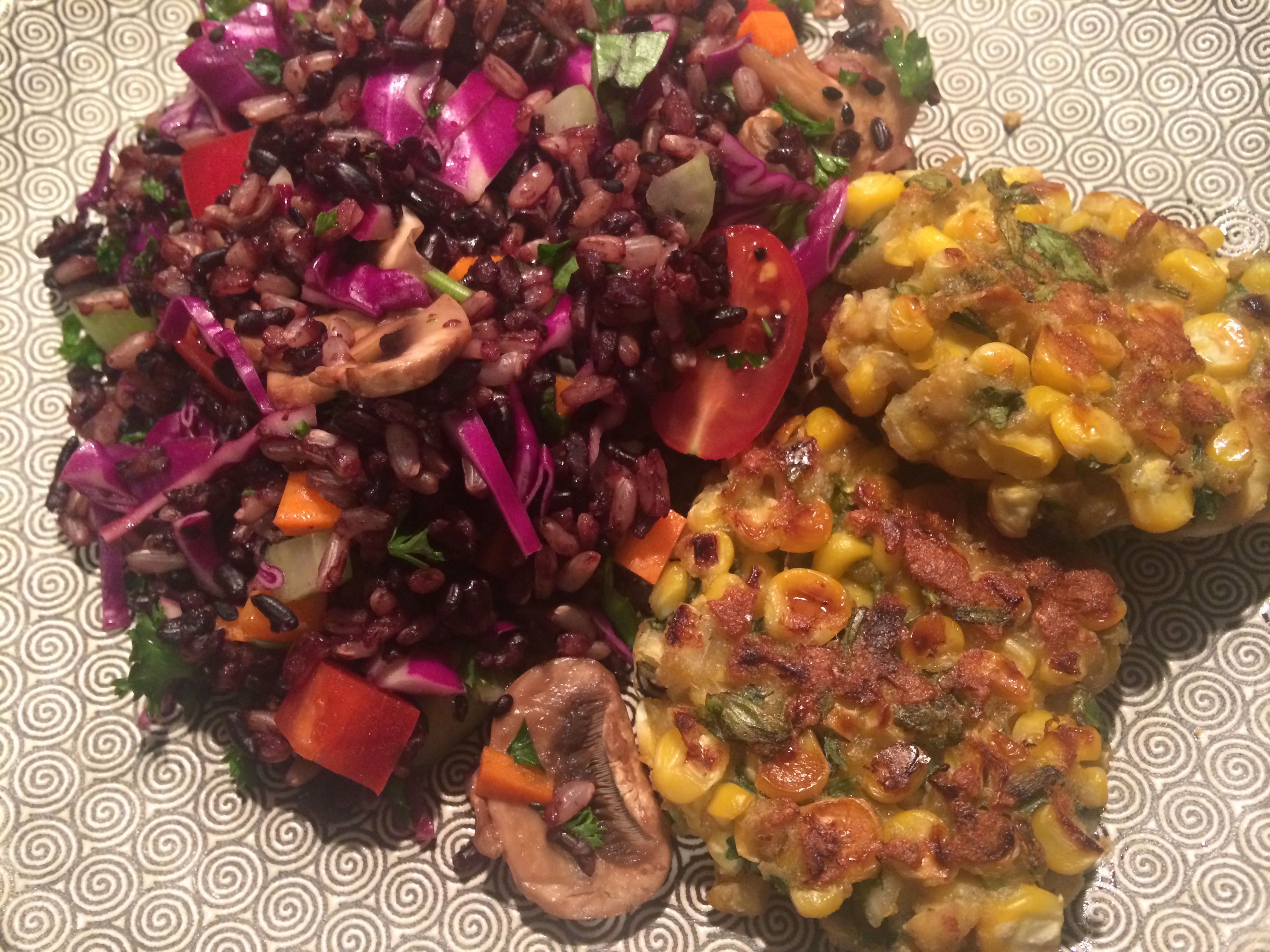
blog corncakes

Forget the protein, find the fibre


NF-Mar11-Why-You-Should-Eat-More-BeansIMG_9039

As I have talked about before a lot of people are worried about getting enough protein and worried about getting too much carbohydrate.  This is understandable but really completely back to front!  Most people in Australia are eating too much protein and not enough carbohydrate.   When I am talking about carbohydrate I’m not talking about refined processed carbohydrate, like white flour and sugar.  In other words, I am not talking  sugar extracted from sugar cane, or anything else for that matter.  When whole wheat is converted into white flour 78% of the nutrients in  the wheat, most of the goodness and energy to make a new wheat plant from the seed is lost.   All foods are better whole, not broken down into their constituent parts.  Orange juice is better for you than  coke but an orange is much better for you, than orange juice.  One major reason is the fibre, the chewy bit of the orange.

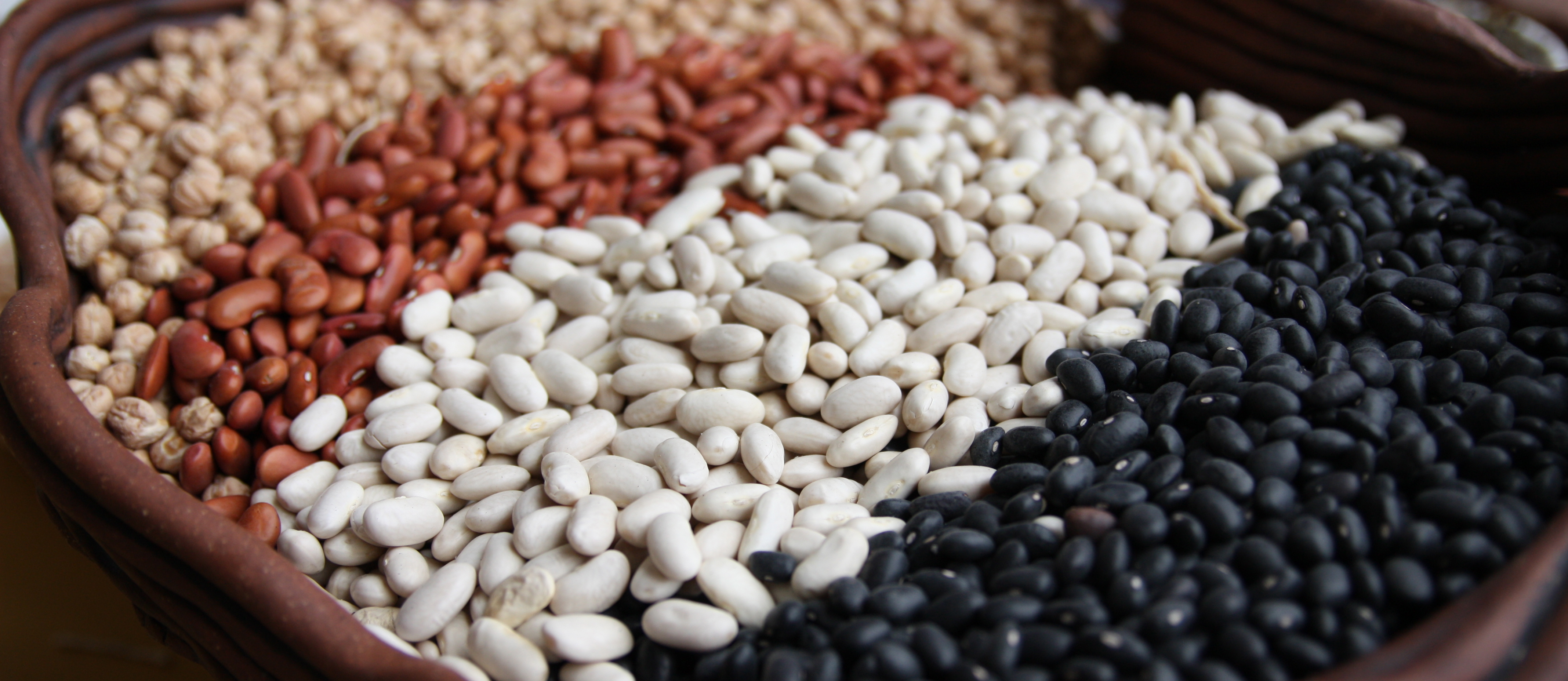
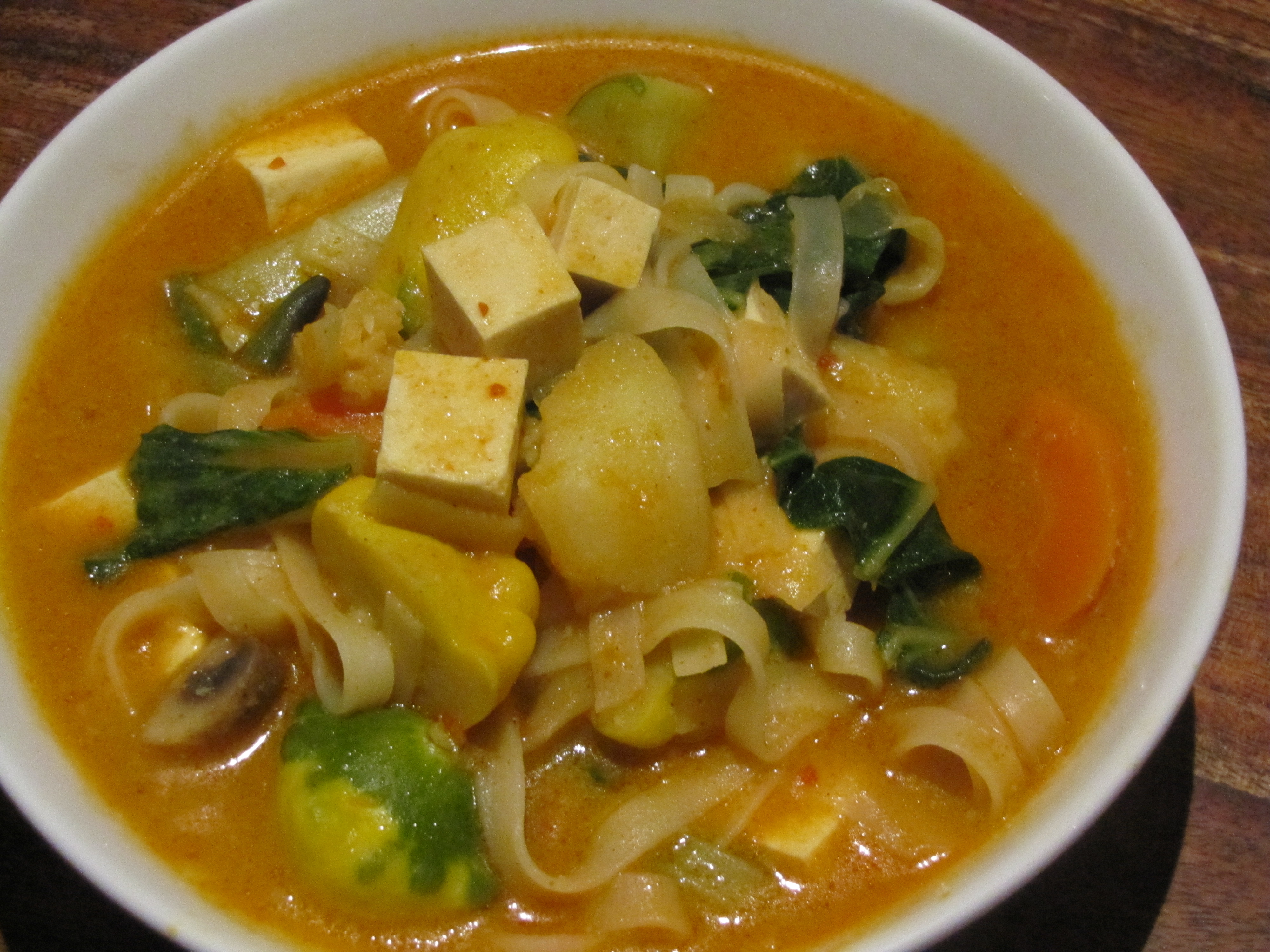
The two photos above show high fibre foods.  Beans are one of the best foods one can eat(http://nutritionfacts.org/2014/03/11/why-you-should-eat-more-beans/) and the other is a high fibre meal of veggies and noodles.   Fibre is only found in plants.

FORGET THE PROTEIN?

As stated in an earlier blog if you are eating enough food you are getting enough protein.   What is the downside of too much protein?  Well, to get too much protein you need to be eating animals, animal secretions(milk) or potential animals (eggs).   The downsides are:

  • What animal protein comes with, which is fat and cholesterol.  These are related to our most serious diseases: heart attack, stroke, cancer and diabetes.  The only place trans fat comes from if it is not man made as hydrogenated vegetable oils to be used in processesed that is,  factory food, is from animals.  The recommended daily intake for a safe level of trans fat?  Zero! (http://nutritionfacts.org/video/trans-fat-saturated-fat-and-cholesterol-tolerable-upper-intake-of-zero/)
  • what animal protein comes without, which is no fibre or the huge variety of vitamins and nutrients found in plants.  It is worth remembering that all energy and life  comes from the sun and plants store that energy in the form of sugars.  These sugars can be simple sugars like the sugar in a grape or banana or complex sugars (this is what is called complex carbohydrates as opposed to refined carbohydrates) like potatoes, wheat, rice and lentils, for example.  No animal can store energy from the sun, all animals have to get it secondhand from eating plants or eating other animals that have eaten plants.  The best way for us to get our energy is by eating whole food plants.    Just one reason is the huge variety and amount of anti-oxidants in plants, compared to animal sources which have only a few trace elements(selenium, copper and zinc which can all be  had from plants without any negatives for  your health.   Plants have on average 6.4 times the anti-oxidant levels than animals
  • The more animal protein you eat, the higher is your level of IGF-1(insulin growth factor -1).  The higher your IGF-1 level the higher your chance of getting cancer.    There are very many pathways to increased cancer risk associated with eating animals, if you are interested check out the research on nutrition facts(greger) in the side bar
  • The more animal protein you eat, the higher your level of toxins in your body like  heavy metals, pesticides and plastics, like PCB.  Why?  Because animals are higher up the  food chain than plants(animals eat plants, or worse still eat animals that have eaten plants, further concentrating the toxins) so these toxins are concentrated.   These toxins are linked to many serious health issues.
  • An additional or competing  explanation for how arteries get blocked was discovered last year.  When humans eat animals and animal products, we need different bacteria in our stomach to digest our food, than if we eat plants.  In fact, fibre is known as a pre-biotic, as the part of the fibre we eat that can be digested promotes the growth of helpful bacteria in our gut.  So, instead of spending a lot of money on probiotics or taking your probiotics(helpful gut bacteria) in  yoghurt with a large amount of fat and protein (and possibly sugar), just eat plants.  Your bowel movements will never have been better!

The bacteria in the stomach of meat and eaters of animal products turn substances almost only found in meat, eggs,dairy and fish(except also found in  lecithin) into a chemical called TMAO which is then laid down on the artery or blood vessel wall, leading to blockages and possible heart attack, stroke and an inability to get an erection. (http://nutritionfacts.org/video/carnitine-choline-cancer-and-cholesterol-the-tmao-connection/)

  • meat causes inflammation and inflammation is considered to be a the base of much of the disease that we suffer from in the west.  Inflammation is  part of  our immune response, and if our body is in a state of chronic low level inflammation, then it is in a state of stress.  This is the situation for many meat eaters, whereby eating meat stimulates an immune response.  Why?  Because the bacteria in meat even though they may be killed by cooking, still elicit a  response from our immune system, when they leak through the gut wall


THE UPSIDE OF FIBRE

Most people in Australia are not getting enough fibre.  Why because they are eating too much meat, fish, dairy, eggs, processed food  including take away foods.   The first four on that list, the animal products don’t have any fibre and the processed and take away food have very little.   The place to get fibre is plants.  All plants have fibre but seeds, like rice and oats  have lots, as do storage organs like potatoes and sweet potatoes.  One of the many reasons that plants are so good for you is that we eat all of the different part of the plant(roots eg carrot, stems eg celery, flowers eg broccoli, leaves eg spinach, fruit eg apple, seed eg wheat or beans/peas, storage organs eg potatoes)  This is the reason that there is such a huge variety of nutrients in plants as there are different chemicals in each part of the plant playing a different function for the  different part of the structure of the plant

The upsides of fibre are:

  • fibre clears toxins out of your body by keeping bowel movements regular and flushing these toxins out with our waste.
  • why is oats considered to be good for dropping your cholesterol?  Because it is high in fibre and just like the above dot point for toxins, it flushes the excess cholesterol out with our waste. The best way to reduce your cholesterol is don’t put in any in!  Our body produces all of the cholesterol it needs and like everything it is a self regulating well balanced system given the right environment.  The only place cholesterol is found is in animal products so every bit of animal, milk or egg that we put in our mouth we are creating a problem for our body, as to how it is going to manage the cholesterol
  • fibre is a pre-biotic-it sets the environment in our gut for the growth of good bacteria.  The gut is beginning to be considered like a second brain, with neurotransmitters from our brain being in our gut and the type of bacteria people have in their gut being closely related to their mood.   Alternative medicine people have long thought that the gut/digestive tract and emotions/mental health are closely related and science now seems to be bearing this out
  • fibre is anti-inflammatory because of the bacteria needed to digest it produce a short chain fatty acid which has many beneficial effects including reducing inflamation.
  • fibre is great for weight loss as it fills you up!  ( and lots of it is not digested and just goes out the back end)  Eating plants, that is eating fibre, also speeds up your metabolism, so more of the calories you eat are just burnt up sitting around and are given off in  heat.  If you eat fat(read fish, dairy, eggs and meat) only 3% of calories in the fat, are used up in digestion, so the  fat on your lips, is the fat on your hips.   The other benefit of eating fibre(plants) for weight loss is that you don’t have to restrict your calories, that is, go hungry to lose weight.  When we do  that(go hungry) the body thinks there is an emergency on  and slows our metabolism down to protect us, making it harder to lose weight, so we have to starve ourselves more.  The consequence is that when we give up( which we will, cos you can’t go hungry forever) and we start to eat normally the body will go, bewdy, the hard times are over, let’s stack the weight on in case things get  bad again!

Eating fibre(whole food plant diet) is fun as you get your taste buds back from the fat, sugar and salt, you get to taste a huge variety of foods(like realising cabbage is sweet) and you know with every mouthful it is good for you.


Enjoy!